

Contact us
Looking for real estate in Italy? Contact us.
Italy offers one of the most exciting property markets in Europe, with options ranging from €30,000 country houses in Molise and Abruzzo to multi-million euro villas overlooking the Tuscan hills or the Lombardy lakes. Whether you’re searching for a holiday home with a private garden in Puglia, a renovated farmhouse with vaulted ceilings in Umbria, or a city apartment in the heart of Milan or Rome, the Italian real estate market in 2026 presents remarkable opportunities for foreign buyers.
This article is NOT a listing portal. Instead, it’s a legal guide from Bersani Law Firm&Partners—a boutique Italian law firm based in Verona—focused on how to buy safely. Our goal is to help you navigate Italy housing for sale from the legal side: due diligence, contracts, taxes, risks, and how an Italian attorney working exclusively for you can help you avoid costly mistakes.
The Italian property market can be thrilling to discover, but without proper legal guidance, foreign buyers risk losing deposits, purchasing properties with hidden liens, or buying houses that face demolition orders. Before you sign any preliminary contract or wire any deposit, we strongly encourage you to request a tailored legal consultation with our team.
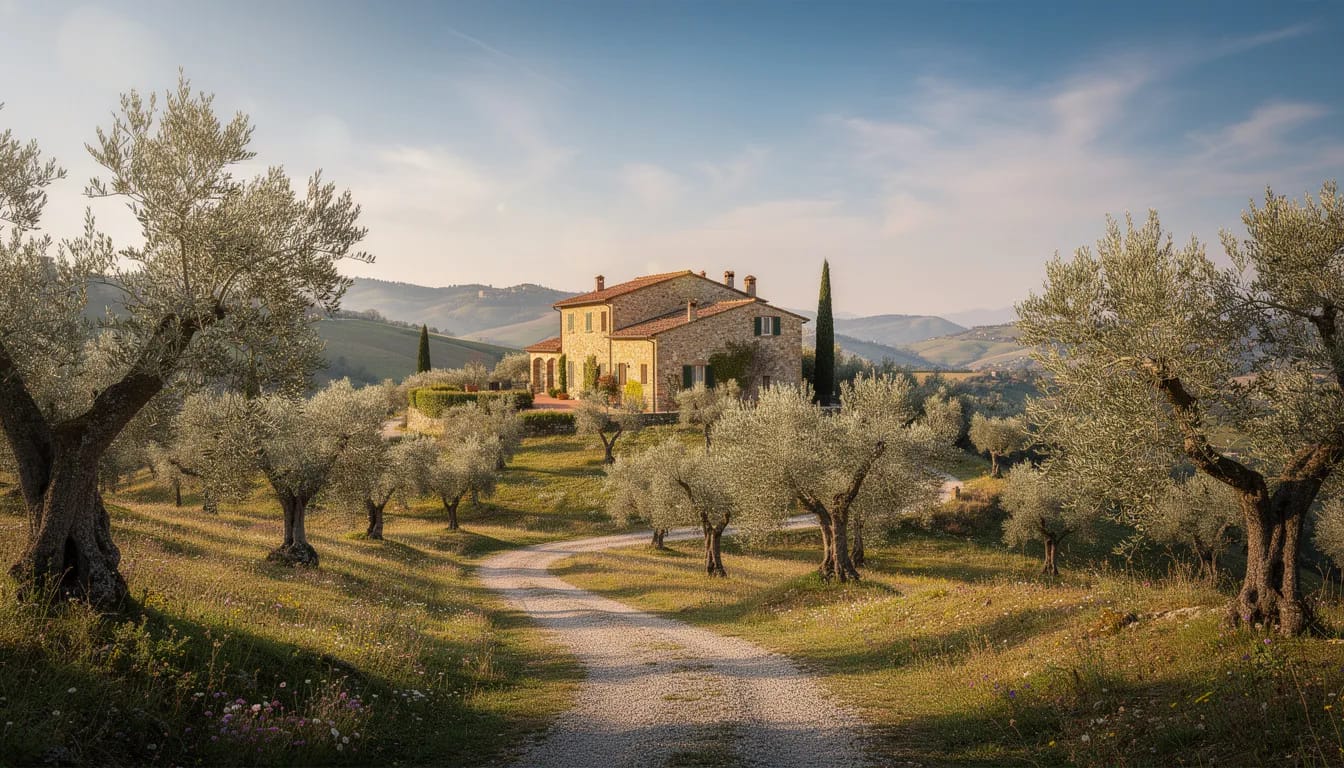
Buying a home in Italy as a foreigner requires meeting several essential requirements:
The typical search path for foreign buyers begins online. Portals like Gate-away, Immobiliare, and Idealista allow you to search properties across Italy’s regions, filtering by budget, bedrooms, location, and property type. Many buyers also work with local real estate agencies who have access to listings not yet published online, especially in villages and rural areas where word-of-mouth still dominates.
The 2025-2026 Italian housing market is stabilizing with high demand and rising prices in major cities like Milan and Rome, while rural areas offer affordable opportunities. The Italian real estate market in 2026 is characterized by a normalization following years of volatility, with an expected rise in transaction volumes by approximately 8.4% to reach 800,000 sales.
Common property types and price ranges include:
Real estate agents in Italy typically charge a commission of 2–4% plus VAT on each side of the transaction. While agents can help you find property and negotiate price, they do NOT substitute for a lawyer acting exclusively in the buyer’s interest. The agent’s primary incentive is to close the sale.
Budget an additional 10-15% on top of the purchase price for taxes and fees when purchasing property in Italy.
The notary (notaio) is a public official who certifies the final deed, but their role is to ensure the transaction is legally valid—not to negotiate terms that protect you specifically. This gap between what agents and notaries provide and what buyers actually need is precisely where a buyer’s attorney becomes essential.
When you retain Bersani Law Firm&Partners, we are paid by you alone, with a legal duty to protect your exclusive interests. Unlike agents who earn commissions on closed sales, or notaries who serve a public function, your attorney works solely for you.
The Italian real estate market has been attracting foreign investors for many years. Buying property in Italy can be a daunting process for foreign buyers.
Foreign buyers without legal support face significant risks:
In our practice, we’ve seen buyers lose deposits of €10,000–€60,000 after signing poorly drafted preliminary contracts. Others have purchased houses later targeted by municipal demolition orders for illegal extensions, or discovered post-purchase that the property had outstanding condominium debts exceeding €20,000.
An attorney can negotiate protective clauses that agents and notaries typically leave in standard form:
All advice and contracts from Bersani Law Firm&Partners can be provided fully in English, with certified translations where required. We work regularly with buyers from the US, UK, Canada, Australia, and beyond.
Before you sign any proposta or compromesso, send us scans of the draft documents for immediate review.
Looking for real estate in Italy? Contact us.
The purchase process for property in Italy involves three binding stages: Proposta d’Acquisto, Compromesso, and Rogito, each with specific deposit requirements. Understanding these stages is crucial for a safe and successful transaction.
Each stage has its own legal and financial implications, making it essential to have legal guidance throughout the process.
Buying property in Italy follows a structured sequence. Understanding each stage—and where legal intervention is critical—helps you avoid expensive missteps.
Typically submitted with a small deposit of 1–5% of the purchase price.
Usually valid for 7–15 days while the seller considers.
Can already be legally binding if not carefully drafted.
Bersani Law Firm intervention: We revise the proposta in Italian and English before you sign, ensuring it includes appropriate conditions and protections.
Conducted before committing to a binding preliminary contract.
Covers title verification, land registry checks, planning compliance, and lien searches.
Bersani Law Firm intervention: We perform comprehensive checks and provide a written “go/no-go” recommendation.
Binding agreement with a deposit typically of 10–30% of purchase price.
Defines payment schedule, conditions, deadlines, and penalties.
Bersani Law Firm intervention: We draft or revise protective clauses covering conditions precedent, division of costs, and delivery requirements.
Bank conducts technical appraisal (perizia) of the property.
Mortgage approval typically takes 4–8 weeks.
Bersani Law Firm intervention: We coordinate with the bank to ensure mortgage conditions align with the purchase contract.
Final transfer of ownership before the notary.
Payment via bank manager’s cheque (assegno circolare) or escrow.
Bersani Law Firm intervention: We review the draft deed in advance to verify it reflects all prior agreements.
Even for properties under €100,000 in regions like Calabria or Molise, never skip the due diligence step. Cheap houses often carry the highest legal risk due to unclear title chains, decades of unregistered modifications, or complex inheritance situations.
For buyers who cannot travel to Italy for each signature, the entire process can be managed remotely through a power of attorney (procura speciale), with major decisions confirmed via email or video call.
Before you commit any significant deposit, comprehensive legal verification protects you from hidden problems that may not surface until years after purchase.
Your attorney verifies in the Conservatoria (Land Registry) that the seller is the sole legal owner. This includes identifying co-heirs who may have claims, confirming the absence of pending inheritance disputes, and checking for usucapione (adverse possession) claims where third parties may have acquired rights through long-term occupancy.
A thorough search reveals any ipoteche (mortgages), pignoramenti (seizures), legal charges, condominium debts, and tax liens registered against the property. These encumbrances transfer with ownership unless properly discharged before closing.
The cadastral maps and floorplans must match the actual property. This check confirms that extensions, terraces, panoramic views from added windows, separate independent units, pools, and garages are correctly registered. Discrepancies can block the sale or create future enforcement problems.
Verification includes building permits (permesso di costruire), any amnesties (condoni) for past violations, certificates of habitability (agibilità), and compliance with local zoning rules (PRG, PGT). Properties in the south or in mountains and hills often have complex planning histories requiring careful examination.
For apartments, we check past and future extraordinary works (facade, roof, lifts), review recent meeting minutes, and identify unpaid condominium fees that might transfer to the buyer. Annual charges can range from €1,000 to €5,000+ depending on the building’s services and space.
In regions like Tuscany, Sardinia, and Sicily, landscape, environmental, or cultural heritage restrictions (vincoli) may limit renovations, subdivisions, or commercial uses like Airbnb rentals. Properties near the sea, in protected hills, or classified as agricultural land require additional verification.
Bersani Law Firm&Partners structures these checks into a comprehensive written due-diligence report in English, with a clear recommendation before you send any large deposit.
Understanding Italian real estate contracts—and knowing how a lawyer can adjust standard terms—protects you from signing obligations you didn’t fully understand.
This initial offer can already be legally binding once the seller accepts. Agents often present pre-printed forms that favor quick closure rather than buyer protection. Before signing, have your attorney revise the text to include:
These two deposit types have very different consequences:
Deposit Type | If Buyer Withdraws | If Seller Withdraws |
|---|---|---|
Caparra Confirmatoria | Buyer loses deposit | Buyer entitled to double the deposit |
Caparra Penitenziale | Buyer loses deposit (exit fee) | Seller returns deposit (exit fee) |
For example, on a €300,000 apartment in Florence with a €30,000 caparra confirmatoria, if the seller backs out, you’re entitled to €60,000. However, if you withdraw without legal justification, you lose your €30,000. Understanding which type applies—and negotiating the right one—is critical.
This binding agreement commits both parties to complete the sale. Key clauses to negotiate include:
The notary prepares the final deed, but their role is certification, not buyer advocacy. Your attorney reviews the draft rogito in advance to ensure it accurately reflects all prior agreements and conditional clauses. Any discrepancies should be corrected before the signing ceremony.
Bersani Law Firm&Partners drafts bilingual Italian–English versions of offers and contracts so foreign clients understand every obligation with complete clarity.
Budget for total acquisition costs of approximately 9–15% of the purchase price, covering taxes, notary fees, agency commissions, and legal fees.
For Resale Properties (from private sellers):
Buyer Status | Registration Tax | Mortgage Tax | Cadastral Tax |
|---|---|---|---|
Prima Casa (first home, with residency requirements) | 2% of cadastral value | €50 fixed | €50 fixed |
Second Home / Investment | 9% of cadastral value | €50 fixed | €50 fixed |
For New Properties (from developers):
Property Type | VAT Rate |
|---|---|
Prima Casa | 4% of purchase price |
Standard residential | 10% of purchase price |
Luxury properties | 22% of purchase price |
You’ll need an Italian codice fiscale to complete the purchase. Bersani Law Firm&Partners can assist in obtaining this remotely through consular channels or the Agenzia delle Entrate.
After purchase, budget for:
For high-net-worth buyers relocating to Italy, the flat tax regime for new residents or the elective residence visa may offer significant advantages. We can evaluate these options alongside your property purchase.
Looking for real estate in Italy? Contact us.
While this article focuses on legal protections, buyers often ask where to look. The lifestyle in Italy is characterized by rich cultural heritage, beautiful coastlines, and delicious cuisine.
Here’s a concise regional overview:
Tuscany and Umbria
Farmhouses, vineyards, and hilltop villages define Italy’s most iconic countryside. Prices range from €250,000 for smaller country houses to several million for estates with land. Properties often feature stone fireplaces, vaulted ceilings, and panoramic views of rolling hills. Tuscany is known for its beautiful landscapes, including olive groves and vineyards. Umbria is rich in vineyards and olive groves, offering a blend of magnificent landscapes and historic towns.
Lombardy and the Northern Lakes
Lakeside villas and apartments near Como and Garda attract both lifestyle buyers and investors. Strong rental demand from visitors and tourism supports the investment case, though prices reflect the premium location.
Puglia and Abruzzo
More affordable coastal and countryside homes, including traditional trulli and historic townhouses, often price below €150,000. These regions offer beaches, mountains, and authentic village life with easy access from major airports. Abruzzo is known for its stunning natural beauty, where the Apennines meet the Adriatic Sea.
Piedmont, Marche, and Liguria
A mix of mountains, countryside, and sea attracts buyers seeking both lifestyle and mid-term appreciation. Prices vary widely depending on proximity to the coast or major cities. Liguria features a 300-kilometer coastline with a mix of beaches and rolling hills. Piedmont is home to UNESCO World Heritage vineyards and offers a mix of mountains, plains, and hills.
Ultra-Low-Cost Properties in Molise and Calabria
Rural properties from €30,000–€70,000 exist, but often require extensive renovation. These houses frequently have complex title histories, decades of unregistered modifications, and unclear planning status. Extra legal and technical checks are essential. Calabria is an emerging market for real estate investment in Italy. Sardinia is also considered an emerging market for real estate investment in Italy.
Trentino Alto Adige, Aosta Valley, and Liguria are the most expensive regions for property in Italy. High-efficiency “green” properties command a 15-18% price premium due to European energy rules.
Regardless of region or price, legal due diligence is non-negotiable. Bersani Law Firm&Partners works with buyers across all of Italy from our Verona base.
Many buyers have long-term plans beyond a simple purchase: living part-time or full-time in Italy, relocating family, or planning retirement. Understanding how property ownership connects to immigration is essential.
Owning a home in Italy does NOT automatically grant citizenship or a visa. However, property ownership can support certain immigration paths when combined with the right legal strategy.
Bersani Law Firm&Partners assists clients with:
For an in-depth overview of these citizenship and visa options, visit Bersani Law’s HR Magazine.
For clients planning to relocate, we recommend legal planning that considers both the property purchase and the optimal immigration and tax framework together.
Many of our clients buy property from the US, UK, and other countries without being in Italy for every stage. Modern legal practice and technology make this entirely feasible.
We can prepare a procura speciale allowing Bersani Law Firm&Partners to sign specific documents on your behalf. You retain control over all major decisions, confirmed via email or secure video call before we act.
Documents flow securely throughout the process:
We coordinate with local surveyors (geometri) and technical experts who physically inspect the property, verifying:
All bank transfers and payments are structured to minimize risk:
You can buy with confidence without boarding multiple flights to Italy.
Our role is completely independent from any seller or agent. We are retained and paid exclusively by you, the buyer, on a transparent fee basis with no hidden charges.
Pre-Purchase Consultation
Full Due Diligence and Contract Negotiation
End-to-End Assistance
Our fees are typically fixed or capped for each stage, agreed in writing before we begin work. The cost of proper legal representation is often a small fraction of the potential loss from a problematic purchase—a €5,000–€10,000 investment in legal fees can prevent losses of €50,000 or more.
Ready to discuss your Italian property plans? Here’s how to reach us:
For an initial review, please send:
Do not sign any document or wire any deposit for a house in Italy before a qualified Italian attorney has reviewed the legal situation in detail. The excitement of finding your ideal property should never override the protection that proper legal guidance provides.
Contact Bersani Law Firm&Partners today for a tailored consultation on your Italian property purchase or to learn more about the Elective Residence Visa requirements for Italy.
Looking for real estate in Italy? Contact us.
Planning to relocate to Italy through investment, retire on passive income, or claim your Italian…
The Italian Golden Visa—officially known as the Investor Visa for Italy—is one of the most…
The government of Italy has extended a critical deadline that affects thousands of families worldwide.…
If you have been paying attention to the sharp increase in Americans researching a move…
Introduction This guide is for New England residents of Italian descent seeking information about the…
Introduction Purchasing a luxury villa for sale in Italy represents one of life’s most significant…
This website uses cookies.