
| Listen to this article! Getting your Trinity Audio player ready... |
Retirement in Italy: Visas, Taxes, Property & Practical Steps (2027 Guide)
Italy offers a high quality of life for retirees that few countries can match. The food, the climate, the pace of daily Italian life, the architecture you walk past on the way to get groceries – it all adds up to something genuinely different from retirement in suburban Florida or the English countryside. But making it happen legally, financially, and practically requires planning that goes well beyond booking a one-way flight to Rome.
This guide covers everything you need to know to retire in Italy as a foreign national: visa pathways, tax regimes, healthcare, real estate, and the critical first steps after arrival. Whether you are drawn to la dolce vita on a Puglian coast or a quiet Tuscan hilltop, what follows is a concrete, up-to-date roadmap for 2027.
Retirement Italy: Key Takeaways
How to retire in italy? Most foreign retirees use either the Italy elective residence visa (commonly called the “Italian retirement visa”) or, for high-net-worth individuals, the Italian investor visa (“Golden Visa”) to establish legal residence. Those with Italian ancestry should seriously evaluate Italian dual citizenship, which eliminates the need for a visa entirely.
Consular benchmarks for the Elective residence Visa for Italy currently sit around €31,000–€35,000 per year in stable passive income for a single retiree, with higher thresholds for couples. You will also need proof of long-term private health insurance and suitable accommodation in Italy.
Italy stands apart from other EU retirement destinations thanks to a combination of factors: access to a top-tier public healthcare system, a 7% flat tax regime for qualifying foreign pensioners in eligible Italian municipalities with under 30,000 residents, relatively affordable real estate outside major cities, and an unmatched quality of Italian culture and daily life.
Buying property is not required for any retirement visa, but many retirees do purchase eventually. The recommendation is to rent first and engage a specialized Italian real estate and immigration lawyer – such as Bersani Law Firm in Verona – to handle due diligence, contracts, and tax planning.
Bersani Law Firm manages the full strategy to retire in italy: selecting between the Elective residence Visa for Italy, Italian golden visa, or Italian dual citizenship; structuring foreign pensions and investments for Italian immigration purposes; and assisting with bank account opening, property purchases, and long-term legal compliance.

Why Retire in Italy Instead of Other EU Countries?
Portugal, Spain, and France all attract retirees. Each has merits. But Italy combines lifestyle, cost, healthcare, and immigration flexibility in a way that is difficult to replicate elsewhere – especially once you factor in ancestry-based citizenship and the 7% flat tax.
Lifestyle Advantages of your retire in italy
Italy offers a Mediterranean climate, walkable historic centers, and a food culture that is not an abstract tourism pitch but an actual daily reality. Even smaller towns like Spoleto, Lecce, or Orvieto maintain vibrant local communities with weekly markets, seasonal festivals, and a social rhythm built around piazzas and neighborhood life. The rail network connects most regions, and the cultural density – from Roman ruins to Renaissance churches to Baroque seaside towns – is unrivaled.
Rome offers a bustling city environment rich in history. Lake Como is famous for stunning lakeside views and luxury. Tuscany offers serene environments and rich cultural experiences. These are not niche tourism claims; they are the fabric of everyday Italian life.
Cost Advantages
Living costs are lower in Italy compared to the USA across nearly every category. A cappuccino costs €1.67 in Italy compared to €4.53 in the US. Dining out costs about €10–€15 per meal. A couple can live comfortably in Italy for €2,000–€2,500 monthly in regions such as Abruzzo, Umbria, Le Marche, or inland Sicily – versus significantly higher budgets in Paris, Barcelona, or coastal France.
Healthcare Edge
Italy’s public healthcare system is called Servizio Sanitario Nazionale (SSN). It ranks highly in Europe, with modest co-pays and broad coverage once you register as a resident. Italian healthcare is accessible and often more affordable than in the US. Many foreign retirees find this system more predictable and inclusive than some private-heavy healthcare systems in other EU countries.
Tax and Immigration Advantages if you want to retire in italy
The special tax regime – a 7% flat tax on certain foreign source income in southern municipalities – is directly competitive with regimes like Portugal’s now-expired NHR. Italy also offers long-term residency leading to Italian citizenship, and uniquely, access to Italian dual citizenship for those with Italian ancestry, something unavailable in most EU countries.
Cultural and Family Factors
Many foreign retirees have Italian roots, family property, or emotional ties. For them, Italy is not just a “cheaper” EU alternative – it is a return to something personal. This factor alone makes Italy a more meaningful retirement choice for millions of diaspora families worldwide.
Can Foreign Retirees Live in Italy Long-Term?
Non-EU/EEA/Swiss retirees generally need a long-stay visa plus a residence permit. EU citizens can move more freely but still must register locally and consider Italian tax residence rules.
There is no official label called an “Italian retirement visa.” The Italy elective residence visa (ERV) functions as the de facto retirement visa for financially self-sufficient non EU citizens who do not intend to work. The visa is designed for non-EU citizens with stable passive income.
Foreign retirees who are high-net-worth individuals can instead consider the Italian investor visa (often called the Golden Visa), which allows investment-based residence and does not require showing passive income streams.
Those with qualifying ancestry – a parent, grandparent, or in some cases more distant Italian-born ancestor – may have a completely different path to retire in italy: acquiring Italian citizenship and living in Italy without any visa at all.
Three macro-paths at a glance:
| Path | Best For | Key Requirement | Timeline |
|---|---|---|---|
| Elective Residence Visa | Retirees with steady pension/passive income | ~€31,000+/year passive income | 3–6 months |
| Investor/Golden Visa | HNWIs with capital to invest | €250K–€2M investment | 2–4 months |
| Italian Citizenship | Those with Italian ancestry or spouse | Documented lineage or marriage | 1–4 years |
A boutique immigration law firm like Bersani Law Firm can help choose the optimal route based on age, assets, income, and family history.
Italian Elective Residence Visa (Retirement Visa)
The Italian elective residence visa is the main option to retire in italy: this is a national long-stay visa (type D) for foreign retirees and other individuals who have sufficient passive income and wish to live in Italy without working. Prospective retirees must demonstrate financial stability to obtain a visa.
Acceptable retirement income sources typically include foreign state pensions (e.g., US Social Security, UK State Pension), private pensions, annuities, rental income, dividends, and conservative investment income – but not employment income or self-employment in Italy.
Financial benchmarks used by many Italian consulates:
- Single applicant: minimum annual passive income around €31,000–€35,000 from eligible retirement income
- Couple: approximately €38,000–€45,000
- Each additional dependent: €5,000–€8,000 more
The Elective Residence Visa requires at least €31,000/year income, though consulates have discretion and can demand more. The visa application requires proof of income and accommodation.
Documentation expectations include recent tax returns, pension and retirement income statements, bank statements showing reserves, a signed rental contract or property deed in Italy, and comprehensive health insurance valid in Italy and the Schengen Area.
The application must be lodged with the Italian consulate having jurisdiction over the applicant’s legal residence. Processing can easily take 60–90 days with no guaranteed rush.
An Italian immigration lawyer can pre-audit all income, bank, and real estate documentation against the specific expectations of the chosen consulate, significantly reducing the risk of refusal.
Step-by-Step to retire in italy: How to Apply for the Italy Elective Residence Visa
Start 6–9 months before your intended move date. Here is the process:
Step 1: Eligibility Check. Verify your passive income qualifies, assess health considerations, and determine whether you or your spouse might instead qualify for Italian citizenship or an Italian pension that changes the strategy entirely.
Step 2: Housing. Italian Consulates normally expect either a registered rental contract of at least 12 months (a registered contratto di locazione) or ownership of a residential property in Italy. Avoid informal or tourist-only contracts – they will not satisfy the requirement.
Step 3: Health Insurance. You must present private health insurance with coverage throughout Italy and minimum medical limits (often €30,000 or higher), including hospitalization and emergency repatriation. Some consulates insist on policies with no major deductibles.
Step 4: Prepare the Visa File. Assemble passport (valid for the duration), visa application forms, recent photos, proof of accommodation, income documentation, comprehensive health insurance, and a concise cover letter explaining your retirement plan. All documents should be in the language required by the consulate, with translations and apostilles where needed.
Step 5: Consular Appointment. Many consulates now require online booking months in advance. Book your visa appointment early. From January 2025, biometric fingerprinting is required for most national visa applicants. Bring originals plus organized copies.
Step 6: After Approval. Now you are ready to retire in italy. The visa is usually issued as a multiple-entry sticker valid for 1 year. It allows entry but not long-term stay until converted into a permesso di soggiorno (Italian residence permit) in Italy.
For a detailed walkthrough, see the Retire in Italy Visa: Elective Residence Visa Guide for 2026.
Contact us
Looking to retire in Italy? Contact us.
Rules & Limitations of the Elective Residence Visa
The Elective Residence Visa does not allow employment in Italy. The elective residency visa and the related residence permit do not permit employment or self-employment, and consulates can reject applications that show any intention to work or run an Italian business.
Passive investment management (e.g., overseeing a US brokerage account) is normally acceptable, as long as there is no active commercial activity based in Italy and no Italian clients.
The permesso di soggiorno for elective residence is typically issued for 1 year initially and can be renewed annually as long as the retiree continues to meet the income, accommodation, and private insurance requirements.
After five years of residence, you may apply for permanent residency in Italy. Eventual eligibility for Italian citizenship by residency (usually after 10 years of legal residence for non-EU citizens) is possible if the retiree maintains uninterrupted legal status and complies with tax obligations.
Bersani Law Firm can assist with renewals, monitoring minimum stay days, and coordinating the path from temporary retirement residence to eventual long-term residence or Italian citizenship.

Italian Investor Visa (Golden Visa) for High-Net-Worth Retirees
If you want to retire in italy, you don’t necessarily have a pension.
Wealthy retirees who prefer not to document pension-style income can opt for the Italy investor visa, which grants a 2-year residence permit in exchange for qualifying investments.
Main investment thresholds:
| Investment Type | Minimum Amount |
|---|---|
| Italian government bonds | €2,000,000 |
| Italian limited company | €500,000 |
| Innovative startup | €250,000 |
| Philanthropic/public interest project | €1,000,000 |
Funds must be kept invested for the full residence period. The investor visa allows residence in Italy with more flexibility than the elective residence visa and does not itself forbid employment, though many retiree applicants simply use it to live off existing wealth and investment income.
This route can be strategically combined with Italy’s flat tax regime for new residents, which for certain high-net-worth individuals imposes a fixed annual substitute tax on foreign-source income. A specialist lawyer and tax advisor must evaluate this option carefully.
The main steps: online application via the Italian investor visa committee portal, pre-approval (nulla osta), application at the consulate, then entry to Italy and application for the investor residence permit.
Bersani Law Firm has specific experience with investor visas and can align the chosen investment with the client’s long-term retirement and succession planning, including potential Italian citizenship in the future. See their comprehensive guide to the Italian Golden Visa.
Retire in Italy Through Italian Citizenship or Italian Dual Citizenship
For many foreign retirees, the most powerful “retirement plan” is not a visa at all but Italian citizenship – especially for those with parents or grandparents born in Italy. This is the best scenario to retire in italy, as you can come without any Visa.
Citizenship by descent (jure sanguinis): Many citizens of the USA, Canada, Brazil, Argentina, Australia, and the UK may qualify if they have at least one Italian ancestor who did not naturalize in another country before the relevant child’s birth. Under recent reforms (Law 74/2025), only those with an Italian-born parent or grandparent may now apply via the administrative route, though existing applications filed before the reform are grandfathered.
1948 cases: Some lines passing through an Italian woman before January 1, 1948 require a judicial case filed in Italian court. Firms like Bersani Law Firm handle such court-based citizenship petitions.
Citizenship by marriage: Foreign spouses of Italian citizens can apply after a certain number of years of marriage and residence, with language proficiency requirements. This can be attractive for mixed-nationality couples planning retirement in Italy. Learn more about Italian citizenship by marriage.
The retirement advantages of Italian dual citizenship are substantial: no need for an Italy retirement visa, full access to SSN public healthcare under the same conditions as other Italian citizens, no elective residence income thresholds, and full Schengen/EU mobility rights.
Citizenship takes time – often 2–4 years depending on route and consulate or court. Readers planning retirement in the next few years should assess eligibility early, potentially combining a temporary visa with a long-term citizenship strategy. Explore the benefits of Italian dual citizenship.
Life After Arrival: Residence Permit, Health Insurance & Everyday Setup
You have landed in Italy with your elective residence or investor visa stamped in your passport. The visa alone is not enough. The first 90 days set the foundation for everything that follows.
Applicants must apply for a residence permit within 8 days of arrival. You file for a permesso di soggiorno at the local Questura or via the post office kit, depending on local procedure. Typical documents needed: passport, visa, passport-sized photos, income proof, housing contract, and health insurance.
You will also need a codice fiscale – an Italian tax code – early on. It is required to sign leases, set up utilities, buy property, or open an Italian bank account. It can be obtained at the Agenzia delle Entrate or with pre-arrival assistance from a law firm.
Health coverage transitions in phases: initially you rely on the private health insurance used for the visa. Then you evaluate registration with the SSN – either mandatory (if qualifying) or voluntary (by paying an annual contribution, often linked to pension income or a fixed table). Retirees can access SSN after registering with the national health service.
Pay close attention to consistency in personal data across all documents – name spelling, address format, birth date. Even small discrepancies can delay banking, healthcare, and municipal registration. Italian bureaucracy is complex and slow, complicating residency and official processes.
Municipal registration (residenza anagrafica) at the local comune is necessary for access to local services, registering vehicles, and starting the clock for long-term residence and potential citizenship by residency.
Bersani Law Firm can coordinate these first months: from the permesso di soggiorno application and SSN registration to local registrations and ensuring that immigration and tax positions align correctly.
Opening an Italian Bank Account as a Retiree: the Must-Have to retire in italy
A local bank account is practically essential for retirees to pay rent, utilities, and healthcare payments, and to receive foreign pension transfers efficiently. Keeping all transactions on foreign bank accounts becomes impractical quickly.
Typical requirements:
- Valid passport
- Codice fiscale
- Proof of address in Italy (registered lease or property deed)
- Residence permit or proof of visa
Foreign retirees from the USA must consider reporting obligations such as FBAR and FATCA for foreign bank accounts – consult a cross-border tax professional.
Choose banks or branches familiar with foreign retirees and offering at least some English-language support, especially in cities like Rome, Florence, Milan, Bologna, or Verona. A law firm can pre-brief partner banks and ensure the bank account structure fits the retiree’s broader estate and tax planning.
How Much Money Do You Really Need to Retire in Italy?
Costs vary significantly by location. Rent for a one-bedroom apartment averages €570.72 in Italy. But that average masks a wide range: rent for a one-bedroom apartment in smaller Italian towns ranges from €400 to €700 per month, while a one-bedroom in central Milan starts around €1,200–€1,500 per month.
Realistic monthly budget ranges (2026 data):
| Expense | Single Retiree (Smaller Town) | Couple (Smaller Town) |
|---|---|---|
| Rent | €400–€700 | €500–€900 |
| Utilities (85m²) | ~€193 | ~€193 |
| Groceries | €250–€350 | €400–€550 |
| Dining out | €100–€200 | €200–€350 |
| Transport pass | ~€36 | ~€73 |
| Health insurance/SSN | €30–€230 | €60–€460 |
| Total | €1,400–€1,800 | €2,000–€2,500 |
A public transport monthly pass costs €36.47 in Italy. Utilities for an 85m² apartment cost around €192.92. These everyday expenses add up predictably in smaller towns and are substantially lower than comparable costs in northern Europe or the US.
Plan for currency risk if pensions are paid in USD, GBP, CAD, AUD, or other non-euro currencies. A 10–15% swing in exchange rates can materially impact your net euro income.
Build a buffer of at least 15–20% above the consular minimum income requirement to handle inflation, unexpected repairs, travel back home, or support for family members.
Bersani Law Firm can coordinate with financial advisors to present the retiree’s income and assets optimally to the consulate and to Italian tax authorities, without overcommitting to unrealistic budgets.
Using Location to Control Your Retirement Budget
Retirees can strategically choose regions like Abruzzo, Le Marche, inland Puglia, or rural Tuscany/Umbria to combine low housing costs with good hospitals and train connections. Northern Italy – Milan, Lake Como, the Dolomites – is beautiful but more expensive.
Try before you buy: Rent for 6–12 months in a target town to experience all seasons, healthcare access, local services, and transport links before purchasing.
Popular retiree-friendly locations:
- Abruzzo (Sulmona, Lanciano): mountain scenery, low costs, easy access to Rome
- Sicily (Siracusa, Ragusa): Sicily provides affordable living and vibrant local life
- Puglia (Ostuni, Lecce): Puglia is known for its whitewashed towns and lower living costs
- Liguria (Imperia, Lerici): coastal charm, milder climate year-round
Balance scenery and practicality. A spectacular hilltop village may lack year-round public transport or hospitals, which matters more as retirees age.

Contact us
Looking to retire in Italy? Contact us.
Tax Rules for Foreign Retirees in Italy
Once a retiree becomes tax resident in Italy – typically if they spend more than 183 days in Italy, have their main home there, or are registered as a resident – Italy taxes residents on worldwide income including pensions, investments, and retirement accounts.
Double taxation treaties (for example, the US-Italy tax treaty) help prevent double taxation for retirees. A foreign tax credit often avoids being taxed twice on the same income. These treaties determine which country can tax specific pension types.
Classification of income may differ between countries. Distributions from retirement accounts, annuities, or trusts may be treated differently under Italian law than in the retiree’s home country. The distinction between employment income, disability pension payments, social security contributions, and private pensions matters significantly for tax filing purposes.
US retirees may still file US tax returns while in Italy. The foreign earned income exclusion and foreign tax credit provisions interact in complex ways with Italian income tax obligations. Consult a cross-border tax professional.
Owning Italian real estate triggers Italian property-related taxes (such as IMU). Foreign financial assets may be subject to Italian monitoring and wealth taxes (IVAFE on foreign investment accounts). Social security arrangements may affect how your retirement funds are treated.
Map each income stream – state pension, private pensions, rental income, dividends, interest, capital gains – under both home country and Italian rules before moving, to avoid surprises after the first Italian tax return.
Bersani Law Firm regularly works with cross-border tax professionals to design pre-move tax strategies, including whether and when to transfer tax residence, how to structure investment accounts, and how to benefit from special regimes where available.
Italy’s 7% Flat Tax Rule for Foreign Pensioners
Italy offers a 7% flat tax for qualifying foreign pensioners who move their tax residence to eligible municipalities in southern Italy – specifically in Sicily, Calabria, Sardinia, Campania, Basilicata, Abruzzo, Molise, or Puglia. Eligible municipalities for the 7% tax must have under 30,000 residents, following the expanded 2026 threshold.
Core eligibility conditions:
- Must receive pension income from outside Italy (foreign pension income)
- Must not have been Italian tax resident in the previous 5 years
- Must move to and maintain residence in an eligible municipality
- Must make a formal election in the first Italian tax return after becoming resident
- Must come from a country with administrative cooperation in tax matters with Italy
The flat 7% rate applies to all foreign source income – not just pension income but also dividends, capital gains, and rental income from abroad. Italian-source income remains subject to ordinary progressive rates under the Italian tax code. The regime lasts up to 10 years.
Not all types of income are automatically covered, and some investment or employment income may remain subject to ordinary Italian tax, so a detailed analysis is essential. This regime can be particularly attractive for retirees with substantial foreign pension income who are willing to base themselves in smaller, often very pleasant towns such as Termoli in Molise or coastal Puglian municipalities. Retirees seeking this benefit should coordinate carefully to avoid double taxation on their worldwide income.
Bersani Law Firm can help match clients to specific eligible municipalities and coordinate with tax advisors to correctly elect and maintain the 7% regime, reducing your overall tax bill significantly.
Healthcare & Health Insurance for Retiring in Italy
Healthcare involves three phases: pre-visa (private health insurance only), post-arrival while still on private insurance, and eventual access to Italy’s public healthcare system (SSN) through mandatory or voluntary registration.
For the Italian elective residence visa, consulates require comprehensive private health insurance covering the entire Schengen area with a minimum of around €30,000 in medical coverage, including hospitalization and emergency repatriation. Private health insurance is often recommended for retirees even after SSN enrollment.
Italy’s public healthcare system, the Servizio Sanitario Nazionale, provides national health service coverage with regional administration. Access comes via a tessera sanitaria (health card), with modest co-pays for many services and variable waiting times depending on region and specialty. The Italian healthcare system is broadly accessible to residents.
Public healthcare costs for expats range from €388 to €2,800 annually for voluntary SSN enrollment, depending on income and regional rules. Medicare does not cover healthcare costs in Italy – this is a critical point for American retirees to understand. Many retirees choose private insurance for faster access to specialists, particularly for complex medical histories.
Factor healthcare into your choice of region: proximity to hospitals, availability of English-speaking doctors, and presence of specialists matter enormously, particularly in smaller towns that otherwise look idyllic. Private healthcare options are more abundant in larger cities.
Many retirees maintain a combination of SSN coverage plus a private top-up policy, especially those who wish to access private clinics in Rome, Milan, or Florence for specialist care. Healthcare payments under this combined approach remain far lower than equivalent coverage in the US.
Bersani Law Firm can refer clients to vetted international health insurance providers and assist with SSN registration and appeals where coverage disputes arise.
Real Estate Options for Retirees & Why Legal Assistance Matters
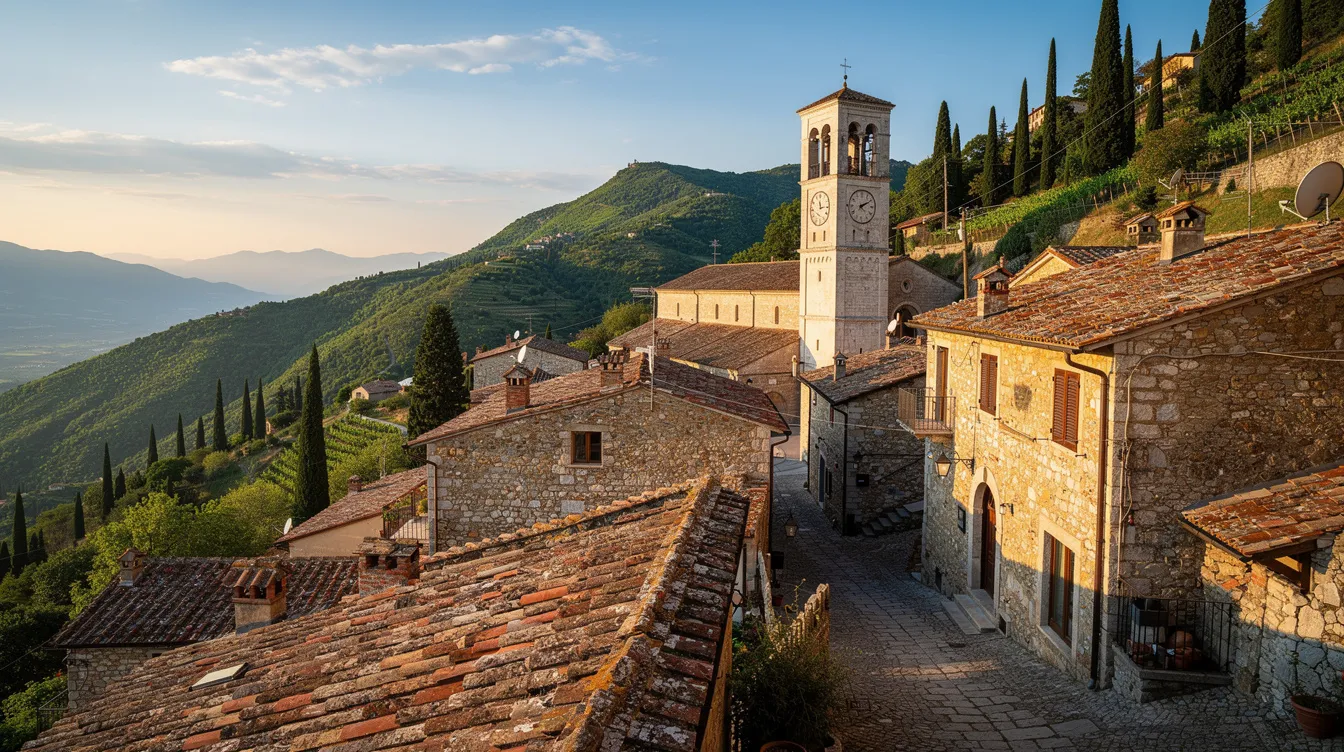
Owning property is not required for an Italian retirement visa. But many retirees do eventually buy a home – whether a village house in Abruzzo, an apartment in Florence, or a seaside property in Liguria. Italian real estate law is highly formal, with strict procedures that differ significantly from the US, UK, or Australian systems.
Main property types retirees consider:
- Apartments in historic centers
- Newly built units in residential complexes
- Renovated farmhouses (casali) in Tuscany, Umbria, or Le Marche
- Small coastal homes in Puglia or Sicily
Prices range from under €80,000 in some inland areas to over €500,000 in prime cities or Riviera locations.
Basic transaction stages:
- Proposta d’acquisto (offer)
- Preliminary contract (compromesso) with a deposit of around 10–20%
- Due diligence on title, zoning, and building compliance
- Final deed (rogito) signed before an Italian notary
Common pitfalls for foreign retirees: hidden co-ownership debts, unregistered renovations, unclear agricultural or heritage restrictions, differences between advertised square meters and legally registered space, and local taxes not disclosed by agents.
An independent lawyer – separate from the real estate agent and notary – should review cadastral records, building permits, mortgages or liens, condominium bylaws, and ensure contracts are bilingual and accurately reflect the deal.
Bersani Law Firm provides comprehensive real estate assistance for retirees: property due diligence, negotiation of purchase contracts, coordination with notaries and surveyors, and alignment of property choices with visa, tax, and inheritance planning.
Rent first, in the same town or region you plan to buy, for at least 6–12 months to understand seasonal changes, neighborhood dynamics, and noise levels before committing capital.
Inheritance, Co-Ownership & Long-Term Planning
Italy applies forced-heirship rules by default, which can affect how an Italian property passes to children or a surviving spouse, especially for foreign retirees with heirs in multiple countries.
EU succession rules allow some foreign retirees to elect the law of their nationality to govern their estate, potentially overriding default Italian rules. This must be done correctly, usually via a will with specific language.
Coordinate Italian property ownership structure – joint ownership, personal vs. company – with global estate planning to avoid unnecessary taxes or disputes among heirs. Bersani Law Firm can draft Italian-compliant wills, advise on the impact of Italian law on foreign wills, and structure purchases to support long-term family objectives.
Pros, Cons & Making Your Italian Retirement Work
Main advantages: high quality of life, strong healthcare system, rich culture and Italian culture at its finest, walkable cities, welcoming local communities, and favorable regimes like the 7% tax rule and investor flat tax. Italy offers retirees seeking both affordability and lifestyle depth a combination that is hard to beat in Europe.
Main challenges: Italian bureaucracy is complex and slow, complicating residency and official processes. English is commonly spoken in Italian cities but not in smaller towns. Tax complexity for foreign pensions and investments requires professional guidance. Regional differences in healthcare or public transport can be significant.
Treat the first year as a structured trial period: use a renewable residency visa, rent instead of buying, and systematically test healthcare access, climate, and daily routines across seasons. Learn at least basic Italian – even modest language skills dramatically reduce stress when dealing with post offices, utilities, doctors, and municipal offices.
Professional help at key stages – visa strategy, tax planning, property acquisition, and citizenship evaluation – makes the difference between a smooth transition and years of frustration. Bersani Law Firm serves as a central coordinator that understands both immigration and long-term life planning in Italy.
How Bersani Law Firm Supports Your Retirement in Italy
Bersani Law Firm is a Verona-based boutique practice led by attorney Marco Bersani, licensed in Italy and Spain, focusing on Italian citizenship, visas, and real estate for foreign clients.
Immigration services for retirees:
- Analysis of eligibility for the Italian elective residence visa and alternatives
- Italian citizenship or Italian dual citizenship (by descent, marriage, or 1948 judicial cases)
- Investor/golden visa planning for HNWIs
Real estate services:
- Legal due diligence on properties
- Drafting and review of offers and preliminary contracts
- Coordination with notaries, addressing cadastral issues
- Ensuring purchases support visa and tax goals
Tax and compliance coordination:
- Working alongside trusted tax advisors to structure foreign pensions and investments
- Evaluating the 7% foreign pension regime and tax incentives
- Ensuring immigration steps and tax residence choices align
The firm offers end-to-end support – from the first strategic call while you are still abroad, through visa and permesso di soggiorno, to house purchase, bank account opening, and eventual Italian citizenship applications.
Contact Bersani Law Firm with a clear outline of your age, nationality, ancestry, income sources, assets, retirement funds, and desired timeline, so the team can propose a tailored roadmap to Italian life.

Frequently Asked Questions About Retiring in Italy
Is it better to retire in Italy with a visa or by obtaining Italian citizenship?
Citizenship, where available, is usually superior: it removes visa renewals and income thresholds, grants full access to Italian public healthcare, and allows free movement throughout the EU. Not everyone qualifies for Italian citizenship, so many retirees must use the elective residence visa or investor visa instead. Bersani Law Firm can quickly screen for possible citizenship via ancestry or marriage before committing to a visa path. Some retirees combine strategies: starting with an elective residence visa while a citizenship-by-descent or 1948 court case is ongoing, then switching to full citizenship once recognized.
Do foreign retirees receive an Italian pension?
Simply moving to Italy as a retiree does not entitle someone to an Italian pension. Pensions are based on social security contributions paid over time in Italy or in countries that have agreements with Italy. Some retirees who worked in Italy earlier in life, or who are EU citizens with contributions in multiple EU states, can aggregate contributions via bilateral agreements to receive pension income from Italy. Readers with complex work histories should consult both their home-country pension agency and an Italian social security specialist.
Can I work part-time or remotely if I hold an Italian elective residence visa?
The elective residence visa does not allow employment or self-employment in Italy, including Italian clients. Some limited remote work for foreign employers – where the activity has no Italian clients or tax presence – may or may not be tolerated and needs careful legal and tax analysis. Retirees who plan to keep working should consider alternative Italian visa types or the investor visa, and obtain tailored legal advice before relying on any mixed work-and-retirement scenario.
Do I have to buy a house in Italy to get a retirement visa?
Buying property is not mandatory. A compliant, long-term rental contract – not just a short-term holiday lease – is usually sufficient to satisfy the accommodation requirement for the elective residence visa. Some consulates view ownership positively but still focus on overall financial stability, health insurance, and the retiree’s realistic budget. Rent first for at least 6–12 months, then buy only after due diligence with an Italy real estate lawyer.
How far in advance should I start planning my retirement move to Italy?
Most retirees should start structured planning 12–24 months in advance: 6–9 months to review citizenship options, choose between ERV and investor visa, gather documentation, and book consular appointments, plus time to visit potential regions and test locations. Those pursuing Italian citizenship by descent or 1948 court cases may need even longer lead times – often 2–4 years. Contact Bersani Law Firm as early as possible so that immigration, tax, and property strategies can be aligned and no opportunity – such as the 7% regime or a citizenship route – is missed due to timing.
Contact us
Looking to retire in Italy? Contact us.