
Italy real estate lawyer – quick answers for foreign buyers
The dream of owning property in Italy has never been more achievable for international buyers. Since 2020, post-pandemic relocations and remote work flexibility have driven a remarkable 25% year-over-year increase in foreign property purchases across the Italian peninsula. Whether you’re eyeing a restored farmhouse in Tuscany, an apartment overlooking Lake Como, or a trullo in Puglia, understanding the legal landscape is your first essential step.
Our firm specializes in assisting foreigners with the legal and procedural aspects of purchasing property in Italy, providing tailored support for non-residents navigating Italian real estate transactions.
An Italy real estate lawyer serves as your dedicated advocate throughout the entire process of purchasing real estate in a country where civil law traditions differ significantly from common law systems familiar to US and UK buyers. Unlike the straightforward closings many Americans experience at home—with title insurance and escrow—Italian property transactions require notarial deeds, extensive pre-contractual formalities, and navigating bureaucratic processes that demand specialised legal oversight.
For foreign buyers, an Italian lawyer provides a crucial bridge between two legal worlds. Here’s what an Italian real estate lawyer for US citizens and other non-EU buyers specifically does:
- Translates Italian legal concepts into clear English — terms like “usufrutto” (usufruct rights) or “servitù” (easements) require precise explanation, not just translation
- Acts only for the buyer and is independent from estate agents and sellers, avoiding conflicts of interest
- Coordinates with the notary (notaio) but does not replace them—the notary is a public officer, while your lawyer is your private advocate
- Can manage the whole purchase remotely with power of attorney, allowing you to complete transactions without travelling to Italy
Typical services provided include:
- Italian property title check
- Preliminary contract review Italy
- Real estate due diligence service
- Tax and inheritance planning
- After-completion support (utility transfers, residence permits, renovations)
This article walks you step-by-step through the purchase process, due diligence requirements, contract stages, costs, and remote buying options. By the end, you’ll understand exactly when and why to engage legal assistance—and how to choose the right professional for your Italian property investment.
Why you need an Italian real estate lawyer (not just a notary)

One of the most common misconceptions among foreign buyers is assuming the notaio will protect their interests. Understanding the distinction between a notary and an independent English speaking property lawyer in Italy is fundamental to a secure transaction.
The Italian notary is a public officer appointed by the Italian government. Their role is to authenticate documents, verify identity, ensure the deed complies with Italian law, and register the transfer with public registries. However, the notary is neutral—they represent neither buyer nor seller. They cannot negotiate on your behalf, advise you on whether the price is fair, or protect your commercial interests if something goes wrong.
An independent Italian lawyer, by contrast, works exclusively for you. They review every document from your perspective, identify risks before you commit money, and advocate for your position in negotiations. This is what “independent legal advice buying property in Italy” actually means—legal representation that has no ties to the seller, the real estate agent, or anyone else with a financial interest in completing the sale.
Common risks without legal representation
Many foreign buyers make costly mistakes by relying solely on estate agents or the notary:
- Signing agent forms in Italian without advice — a proposta irrevocabile (irrevocable offer) drafted by an agent becomes legally binding, often before any due diligence is completed
- Paying deposits before proper checks — losing 10-30% of the purchase price if hidden problems emerge later
- Assuming the notary will handle negotiations — the notary will not advise you to walk away from a bad deal or negotiate better terms
- Overlooking pre contractual liability — misunderstanding what you’re committing to and when. Individuals who feel aggrieved by unfair treatment or harm during a real estate transaction can seek legal remedies under Italian law.
Real-world examples
In a 2023 case in Tuscany, a US couple nearly purchased a property where cadastral discrepancies were identified only after their lawyer conducted thorough checks. The registered floor plans didn’t match the actual structure—a common issue with older Italian properties that had undeclared extensions. Without legal intervention before the compromesso, they would have been locked into buying a property requiring expensive regularisation.
Similarly, a UK buyer in Puglia avoided a hidden easement thanks to legal due diligence conducted before signing. An unregistered right of way across the property would have severely limited future development plans and reduced the property’s value by an estimated 15%. The real estate agent had not disclosed this—not necessarily through bad faith, but because agents are not equipped to conduct this level of investigation.
Key benefits of having your own lawyer:
- Dedicated advocacy for your interests only
- Risk identification before financial commitment
- English-language explanations at every stage
- Negotiating power for contract terms
- Coordination of all parties involved in the transaction
Understanding Italian Law
Navigating the Italian property market requires a solid understanding of Italian law, especially for foreign buyers unfamiliar with local regulations. Italian law governs every aspect of purchasing property in Italy, from the initial offer to the final transfer of ownership. The purchasing process involves several legal steps, including the drafting and signing of a preliminary sales agreement, which must be executed in front of a notary. It is strongly recommended that buyers seek legal assistance from an experienced Italian lawyer to ensure that all legal aspects are properly managed and that the transaction complies with Italian law.
Foreign buyers should also be aware that opening an Italian bank account is typically required for making payments related to the property purchase. Additionally, there are specific tax obligations and potential restrictions on foreign ownership that must be considered. An Italian lawyer can guide buyers through these requirements, helping to avoid common pitfalls and ensuring that the process of purchasing property in Italy is both secure and efficient. By understanding the legal framework and seeking professional assistance, buyers can confidently navigate the complexities of the Italian property market and protect their investment.
Our services for foreign buyers of Italian property
For international buyers from the US, UK, Canada, Australia, and beyond, working with an Italian real estate lawyer doesn’t require you to be physically present in Italy. All services can be provided completely in English through email, video calls, secure document platforms like DocuSign, and Italian power of attorney arrangements when necessary for signing.
Here are the core services a specialised property lawyer provides:
- Real estate due diligence lawyer Italy – Due Diligence Service — comprehensive legal and technical checks before you commit a deposit
- Italian property title check with updated visure from the Conservatoria and Catasto
- Preliminary contract review Italy — scrutinising the compromesso, proposta d’acquisto, and any agent brokerage forms
- Drafting or negotiating the final purchase deed with the notary
- Assistance with mortgages for non-resident buyers and meeting lender’s requirements
- Independent legal advice on buying off-plan, rural homes, historic buildings, or the famous €1 houses that require substantial renovation expenses
Considering a purchase? Request a free 20-minute case review to discuss your specific situation before making any commitments.
Contact us
Need help with your property buy in italy ? Contact us.
Tailored assistance for US citizens and other non-EU buyers
An Italian real estate lawyer for US citizens addresses unique challenges that American buyers face when entering the Italian property market.
Financial coordination and compliance:
US buyers must navigate the intersection of Italian and American requirements. While your Italian lawyer won’t provide US tax advice, they coordinate with professionals who understand:
- IRS reporting requirements and FATCA awareness for foreign assets
- Structuring ownership appropriately—whether in your personal name, through an Italian company, via a trust, or using a US LLC that owns an Italian SRL
- Italian anti-money-laundering identification rules for international wire transfers from US banks
Practical challenges for Americans:
Time zone differences between Italy and the US mean your lawyer must be available for calls during your working hours. Remote signatures are now standard, but they require proper setup. US-based credit checks don’t translate directly to Italian bank criteria—if you’re seeking a mortgage, documentation of foreign income must meet specific Italian standards.
Popular destinations and typical budgets:
American buyers in 2024-2025 are particularly drawn to Tuscany, Umbria, Lake Como, Puglia, and Sicily. Budget ranges for quality properties suitable for renovation or immediate habitation typically fall between €250,000 and €800,000, though prices vary significantly by region and property type. A restored villa near Florence commands different pricing than a rural house in inland Sicily requiring complete renovation.
Independent legal advice when buying property in Italy
The concept of independent legal advice buying property in Italy means exactly what it says: legal guidance that serves only your interests, separate from any advice offered by agents, developers, or the seller’s representatives.
This independence is maintained through strict professional boundaries:
- Reviews all documents only in the buyer’s interest — there’s no pressure to close the deal if problems emerge
- Refuses referral fees from estate agents to avoid any conflict of interest
- Provides written legal opinions in English before each key step—offer, preliminary contract, and final deed
A real estate agent in Italy, while regulated under Law 3/1989 and required to hold professional insurance, is fundamentally a mediator. Their training (80-100 hours) covers basic civil law and appraisal, but they lack the authority and expertise for legal due diligence per Article 1176 of the Italian Civil Code. Agents cannot verify titles, check for hidden mortgages, or assess building regulations compliance. Their commission depends on completing sales—which creates an inherent tension with your need for protection.
How to appoint a lawyer
Engaging an Italian lawyer for your property purchase typically involves:
- Initial consultation — discussing your situation, property type, and specific concerns
- Engagement letter — a written agreement outlining scope of work, estimated fees, and timeline
- Conflict check — confirming the lawyer has no existing relationship with the seller, agent, or other parties involved
- Fee structure agreement — whether flat-fee or hourly, with clear cost estimates for each stage
Role | Works for | Key functions | Limitations |
|---|---|---|---|
Buyer’s lawyer | Buyer only | Due diligence, contract negotiation, advocacy | Cannot replace notary for deed registration |
Seller’s lawyer | Seller only | Protecting seller’s interests | Opposite interests to buyer |
Estate agent | Both parties (mediator) | Marketing, viewings, initial negotiations | Cannot provide legal advice or conduct due diligence |
Notary (notaio) | The State (neutral) | Authentication, registration, tax collection | Cannot advocate for either party |
Real estate due diligence service in Italy
Due diligence is a complete legal, cadastral, urbanistic, and tax review conducted before you pay a substantial deposit. Think of it as a comprehensive health check for the property—identifying any issues that could affect value, legality, or your ability to use the property as intended.
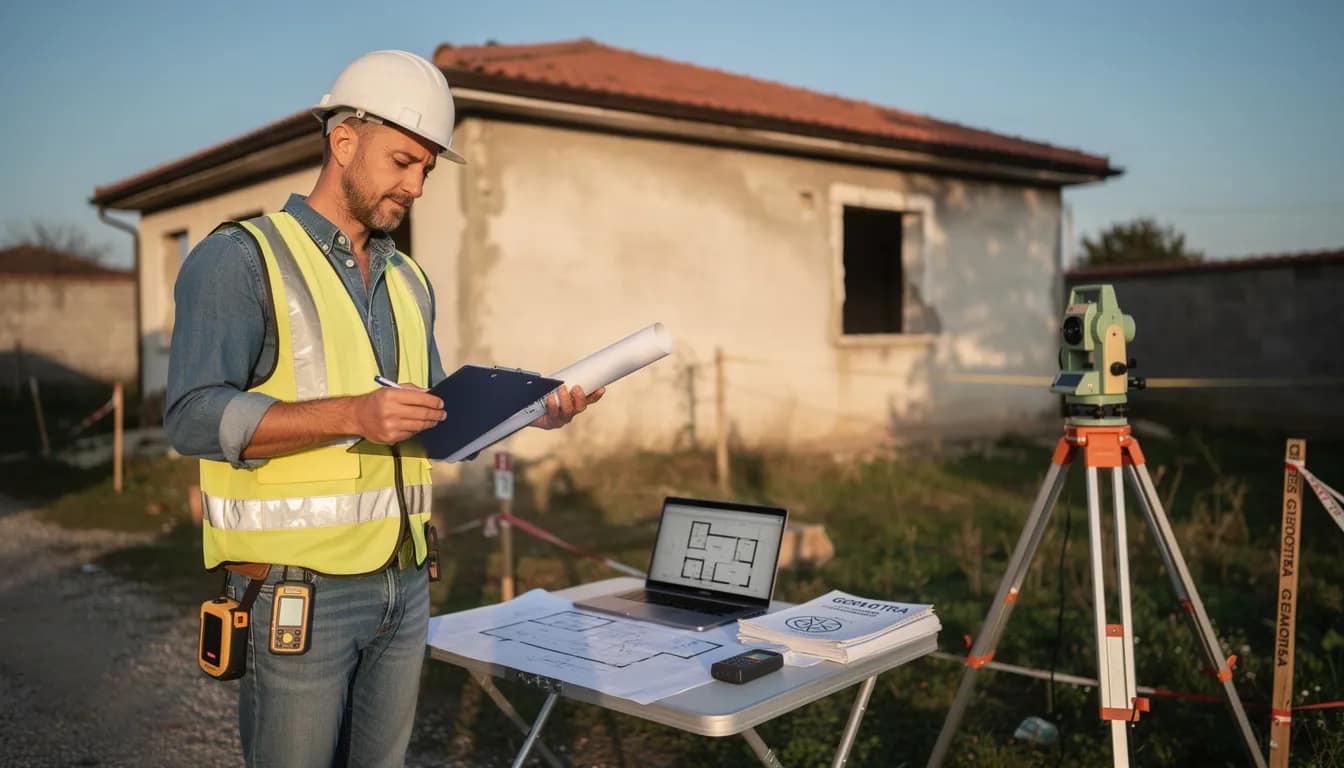
A real estate due diligence lawyer in Italy coordinates with a geometra (surveyor) or architect for technical checks while remaining responsible for the overall legal risk assessment. This collaborative approach ensures nothing falls through the cracks.
Contact us
Need help with Italian real estate ? Contact us.
Main components of a Due Diligence Service
Check Type | What It Covers | Why It Matters |
|---|---|---|
Italian property title check | Ownership history, mortgages, liens, foreclosures (pignoramenti) | Confirms seller has clear right to sell |
Urban planning and building compliance | Permits, condoni (building amnesties), conformity with D.P.R. 380/2001 | Avoids purchasing illegal structures |
Cadastral consistency | Floor plans, surfaces, categories in the Catasto Fabbricati | Mismatches can block sales or require costly corrections |
Condominium situation | Meeting minutes, service charge arrears, planned building works | Prevents inheriting unpaid fees or unexpected assessments |
Tax position and outstanding charges | IMU, TARI, unpaid utilities | Ensures no hidden liabilities transfer to you |
Industry estimates suggest up to 30% of Italian properties have some form of defect—ranging from undeclared extensions to seismic non-compliance in earthquake-prone regions like Abruzzo.
The financial value of due diligence:
In a 2022 case in Lazio, due diligence conducted before signing revealed that a property had unpermitted alterations requiring regularisation. The estimated cost to bring the property into compliance was €50,000. Armed with this information, the buyer was able to renegotiate the purchase price to reflect these costs—or walk away from the deal entirely. Without the diligence process, this would have become an unexpected expense after completion.
Italian property title check – how it works
A proper Italian property title check goes far beyond a simple ownership verification. It includes:
- Obtaining updated visure ipotecarie and catastali from the Agenzia delle Entrate
- Verifying the chain of title for at least 20-30 years where necessary
- Checking for usufruct rights, rights of way, easements and pre-emption rights (diritto di prelazione)—such as agricultural neighbours or tenants who may have legal priority to purchase
Title checks are conducted before signing a binding preliminary contract, not only before the final deed. This timing is crucial because once you sign the compromesso and pay a deposit (typically 10-30% of the price), walking away means losing that money.
Specific registries consulted:
- Conservatoria dei Registri Immobiliari — the main land registry for most of Italy
- Registri Tavolari — used in Trentino-Alto Adige and a few northern provinces with different historical administrative traditions
Statistics from the Agenzia delle Entrate indicate that 15-20% of rural properties have boundary disputes. These issues are particularly common in regions with fragmented land ownership histories.
Technical and regulatory due diligence
While your lawyer handles legal aspects, the geometra or architect addresses technical compliance:
- Surveying the building to verify actual dimensions match official records
- Checking structural elements and seismic compliance where applicable (especially important in central and southern Italy)
- Matching floor plans to existing works — identifying any alterations that need regularisation
Key documents in technical due diligence:
- Certificato di agibilità — habitability certificate confirming the property meets living standards
- APE (Attestato di Prestazione Energetica) — the energy performance certificate required for all property transactions
- Compliance certificates for electrical and plumbing systems per D.M. 37/2008
Older rural properties and historic palazzi often have unregistered alterations accumulated over decades or centuries. These must be regularised before or immediately after purchase to ensure the property complies with current building regulations.
Energy Efficiency and Certificates
When purchasing property in Italy, energy efficiency is an important factor that can influence both the value and the long-term costs of your investment. Italian law requires that every property sale includes a valid Energy Performance Certificate (APE), which rates the building’s energy efficiency on a scale from A (most efficient) to G (least efficient). The APE evaluates key factors such as insulation, window quality, and heating systems, providing buyers with a clear picture of the property’s energy performance.
Ensuring that the property you are considering complies with current building regulations and possesses a valid APE is essential. Not only does this help you avoid legal issues during the purchasing process, but it can also lead to significant savings on energy bills and increase the property’s resale value. In addition, some regions in Italy offer incentives for energy-efficient renovations, making it a smart investment for buyers interested in upgrading their property. By prioritizing energy efficiency and verifying the necessary certificates, buyers can make more informed decisions and enhance the long-term value of their property in Italy.
From offer to final deed: the Italian purchasing process
The Italian buying process follows three main stages that your lawyer will manage:
- Purchase offer (proposta d’acquisto) — initial formal interest, often binding
- Preliminary contract (compromesso/contratto preliminare) — detailed binding agreement with deposit
- Final deed (rogito notarile) — transfer of property ownership before the notary
Typical timelines:
Stage | Timeframe | Key activities |
|---|---|---|
Offer to preliminary contract | 2-4 weeks | Due diligence, negotiation, document preparation |
Preliminary to final deed | 1-3 months | Mortgage processing, final checks, deed preparation |
Total process | 2-4 months | Varies by region and complexity |
A US couple buying a residential property in Florence in 2024 completed their purchase in approximately three months from initial offer to keys in hand. Their lawyer managed all documentation remotely until the final signing, which they attended in person—combining the completion with their first visit to their new Italian home.
Preliminary contract review in Italy
The preliminary contract (contratto preliminare or compromesso) is where buying property in Italy becomes legally binding. This document typically requires a deposit of 10-30% of the purchase price as caparra confirmatoria—a deposit that you forfeit if you withdraw without legal cause.
A thorough preliminary contract review Italy by your lawyer covers:
- Correct identification of parties and property with precise cadastral data
- Purchase price, payment schedule and exactly what’s included (furniture, fixtures, appliances)
- Conditions precedent — mortgage approval, urbanistic regularisation, removal of liens
- Clear timing for completion and handover of vacant possession
- Penalty clauses and escape mechanisms — understanding when either party can withdraw and at what cost
Critical warning: Foreign buyers should never sign an Italian preliminary contract or proposta irrevocabile drafted by an agent without an English speaking property lawyer in Italy reviewing it first. These documents are legally binding under Italian law, regardless of what you thought you were signing.
Real-world impact of contract negotiation:
A Canadian buyer in 2024 was purchasing in Liguria with Italian bank financing. Their lawyer negotiated a specific condition precedent making the preliminary sales agreement contingent on mortgage approval. When the bank ultimately declined the mortgage due to documentation issues, the buyer could withdraw without losing their €45,000 deposit. An agent-drafted contract without this clause would have resulted in total loss of the deposit.
The final deed (rogito) and completion
The rogito notarile is the culmination of the purchasing process. The notary’s role at completion includes:
- Reading the entire deed aloud in Italian (legally required)
- Verifying identity of all parties involved
- Collecting purchase taxes on behalf of the Italian government
- Registering the transfer with the Conservatoria
Your buyer’s lawyer complements the notary’s neutral role by:
- Drafting or checking the deed in advance to ensure it reflects negotiated terms
- Confirming all conditions precedent have been met before you commit final funds
- Arranging sworn translations or simultaneous English explanation during the signing ceremony
Financial preparation:
Completion funds—the final purchase price, taxes, and notary fees—must be available in an Italian bank account or otherwise arranged at least several days before the scheduled rogito date. This typically requires opening an Italian bank account in advance, which your lawyer can facilitate.
Completing remotely:
If you cannot attend in person, your lawyer can sign on your behalf via power of attorney (procura). This must be granted before an Italian notary or at an Italian consulate abroad. US buyers commonly sign their power of attorney at the Italian Consulate in New York, Los Angeles, Chicago, or other major cities.
Contact us
Need help with Italian real estate ? Contact us.
Financing, taxes and costs when buying real estate in Italy
Non-resident buyers face specific mortgage criteria, tax rules, and transaction costs that differ from Italian citizens’ experiences.
Mortgages for non-residents
Italian banks do lend to foreign buyers, but with more conservative terms:
- Loan-to-value ratios typically 40-60% (compared to 70-80% for residents)
- Euro-denominated loans — currency risk falls on the borrower
- Required documentation: codice fiscale (Italian tax code), proof of foreign income, employment verification, bank statements
- Processing time: 2-3 months is common, factor this into your timeline
Purchase taxes in 2024-2025
Buyer type | Registration tax | VAT (if applicable) | Other taxes |
|---|---|---|---|
Second home buyer (from individual seller) | 9% of cadastral value | N/A | Cadastral + mortgage taxes (€100 total) |
Second home buyer (from developer/company) | €200 fixed | 10% or 22% of purchase price | Cadastral + mortgage taxes (€400 total) |
Prima casa (main residence) | 2% of cadastral value | 4% if from company | Cadastral + mortgage taxes (€100 total) |
The prima casa (first home) relief offers significant tax savings but requires you to establish residence within 18 months of purchase and maintain it for specific periods. This may affect your decision depending on your actual plans for the property.
Professional fees and typical ranges
- Notary fees: €1,500-€3,000+ depending on purchase price and complexity
- Lawyer’s fees: 5-10% of purchase price from 20,000 e for full assistance (flat fee common for straightforward purchases)
- Geometra/surveyor: €500-€1,500 for technical reports
- Agent commission: typically 3-4% from buyer (negotiable, varies by region)
Ongoing ownership costs
Foreign investors should budget for annual expenses:
- IMU (property tax) — varies by municipality and property type; not applicable to prima casa for most residential property
- Condominium charges — if applicable, covers building maintenance
- Utilities — electricity, gas, water, waste collection (TARI)
- Insurance — recommended for building and contents
Tax and inheritance planning for international buyers
While this article doesn’t constitute personalised tax advice, a real estate lawyer in Italy can coordinate with tax professionals on:
- Italian inheritance law and forced heirship — Italian law reserves portions of estates for children and spouses regardless of will provisions
- Cross-border succession issues for US, UK, and other nationals owning Italian property
- Use of Italian or foreign wills and registration of an Italian will with a notary
The 2015 EU Succession Regulation (Reg. 650/2012) allows EU citizens to choose their home country’s law to govern their estate via a will. However, US citizens face a different position—they cannot elect US law under this regulation, making proper succession planning particularly important.

Italian Citizenship and Property Ownership
While it is not a requirement to be an Italian citizen to own property in Italy, understanding the connection between citizenship and property ownership can offer significant advantages. Italian citizens often benefit from reduced registration tax rates and may find it easier to access local financing options, especially when purchasing a main residence. These incentives can make the process of buying property in Italy more cost-effective and accessible.
Foreign buyers interested in obtaining Italian citizenship—whether through ancestry, marriage, or naturalization—should consult with an Italian lawyer to understand the eligibility criteria and application process. Gaining Italian citizenship can open doors to additional benefits, such as simplified tax obligations and greater flexibility in property ownership. Whether you are purchasing property as a foreign buyer or as an Italian citizen, it is important to be aware of the legal and financial implications, and to seek professional guidance to maximize the advantages available to you.
Property Management and Maintenance
Owning property in Italy comes with ongoing responsibilities, whether you intend to use it as a second home, a rental investment, or your main residence. Effective property management and regular maintenance are crucial to preserving the value and condition of your investment. This includes tasks such as collecting rent, arranging repairs, handling utility payments, and ensuring compliance with local tax requirements.
Many buyers choose to hire a property management company with expertise in the Italian market to oversee these aspects, especially if they do not reside in Italy full-time. Professional management can help streamline operations, address tenant issues, and coordinate maintenance, giving owners peace of mind. It is also important to budget for recurring expenses, including property taxes, utility bills, and routine upkeep. By staying proactive with maintenance and management, buyers can avoid costly repairs and ensure their property in Italy remains a valuable asset for years to come.
Buying remotely and English-speaking support
Since 2020, many international buyers have completed Italian real estate transactions entirely remotely. Virtual property tours, video consultations, and digital document signing have become standard practice.
An English speaking property lawyer Italy can manage your transaction without requiring travel:
- Review all documents by email and video call — explaining implications in plain language
- Arrange certified translations and sworn interpreters when required
- Obtain your codice fiscale (tax identification) remotely
- Open Italian bank accounts through online-friendly institutions
- Liaise with agents and notaries throughout the process
Practical examples:
American clients in 2023 completed a purchase in Umbria without visiting Italy until after completion. All due diligence, contract negotiations, and preliminary signing were handled remotely, with power of attorney used for the final deed. They first saw their property in person when they arrived with the keys.
A UK buyer purchasing in Puglia in 2024—navigating post-Brexit requirements—similarly used power of attorney arrangements to complete without travelling, coordinating entirely through their lawyer and video calls.
Security measures:
Concerns about sending significant funds internationally are natural. Italian property transactions use established security mechanisms:
- Bank drafts (assegni circolari) for completion payments
- Notary client accounts in certain circumstances
- Detailed paper trails and registration requirements
- Wire transfers between verified bank accounts
How to choose the right Italian real estate lawyer
Not all lawyers are equally suited to cross-border transactions. Consider these criteria:
- Registered with an Italian Bar (Ordine degli Avvocati) — verify registration and good standing
- Properly insured with professional liability coverage
- Experience with cross-border transactions and English-language documentation
- Clear fee structure — whether hourly or fixed, provided in writing
- Transparent communication — regular updates and accessibility across time zones
Questions to ask in your first consultation:
- “How many foreign buyer transactions did you handle in 2024?”
- “Do you work independently from agents, or do you accept referral fees?”
- “What’s your typical response time for emails and questions?”
- “Can you provide references from other US/UK clients in this region?”
- “What’s included in your flat fee, and what would incur additional charges?”
Testimonials and references from other foreign clients—particularly those from your own country who purchased in your target region—are valuable decision factors. The experience of a US buyer in Tuscany differs from a UK buyer in Sicily, and region-specific expertise matters.
Frequently asked questions about Italian property lawyers
Do I really need an Italian real estate lawyer if the notary is involved?
Yes. The notary is a neutral public official who authenticates the transaction and ensures it complies with Italian law, but they don’t advocate for your interests. They won’t negotiate terms, identify commercial risks, or advise you to walk away from a problematic deal. In numerous cases, buyers who relied solely on the notary discovered issues after completion that a lawyer would have identified during due diligence.
Can Americans buy property in Italy remotely, and how does a lawyer help?
Absolutely. US citizens enjoy equal buying rights in Italy under reciprocity principles. Your lawyer can manage the entire process remotely—from obtaining your codice fiscale to conducting due diligence to coordinating with the notary. For the final deed, you can either attend in person or grant power of attorney at an Italian consulate in the US. Many Americans complete purchases without visiting Italy until after they own the property.
How long does the due diligence process usually take in Italy?
A comprehensive diligence process typically takes 2-4 weeks, though complex properties—especially rural homes with multiple parcels or historic buildings with potential compliance issues—may require 6-8 weeks. Your lawyer will provide a timeline estimate based on your specific property type and situation.
What documents should I send my lawyer before making an offer?
Prepare: a copy of your passport, proof of funds (bank statements or mortgage pre-approval), your current address, and the property listing with asking price. If you have specific questions or concerns about the property, note those as well. The more information you provide upfront, the more efficiently your lawyer can begin working.
Can a lawyer help if I already signed a preliminary contract drafted by the agent?
Yes, though options may be more limited. Your lawyer can review the signed contract, identify any concerning clauses, and advise on your rights and obligations going forward. If serious issues are discovered during subsequent due diligence, there may still be contractual mechanisms to withdraw—or grounds to negotiate with the seller. The lesson: engage a lawyer before signing, but if you didn’t, engage one immediately after.
How are legal fees usually structured for foreign buyers?
Most Italian lawyers working with international clients offer flat-fee packages for property purchases, typically ranging from €50,000-€50,000 depending on property value and complexity. This covers due diligence, contract review, negotiation support, and completion assistance. Some lawyers work on an hourly basis (€ 300/hour) or charge a percentage of purchase price (5-10%). Always obtain a written engagement letter with clear fee estimates before proceeding.
Additional Resources
For those new to purchasing property in Italy, a wealth of resources is available to support you throughout the entire process. The Italian government offers official guides and information on the purchasing process, tax obligations, and legal requirements for foreign buyers. In addition, many real estate agents and Italian lawyers specialize in assisting international clients, providing tailored advice and hands-on assistance.
It is also advisable to consult with a financial advisor to fully understand the tax implications and costs associated with your property purchase. Online forums and communities dedicated to the Italian property market can be invaluable for sharing experiences, asking questions, and connecting with other buyers. By leveraging these resources and seeking professional guidance, buyers can navigate the Italian property market with confidence and ensure a successful and secure property purchase in Italy.
Next steps: talk to an Italy real estate lawyer before you sign
The message throughout this guide is consistent: independent legal advice is not optional for foreign buyers—it’s essential. The moments to engage a lawyer are clear:
- Before making an offer — to understand what you’re committing to
- Before signing any preliminary contract — to ensure due diligence is complete and terms protect your interests
- Before the final deed — to confirm all conditions are met and funds are properly arranged
For US citizens and other foreign buyers, the benefits are substantial: reduced risk of hidden problems, clarity in a foreign legal system, the ability to buy real estate entirely remotely, and peace of mind throughout the transaction.
Before contacting a lawyer, prepare a brief property summary:
- Property location and asking price
- Link to the listing (if available)
- Your nationality and current residence
- Your intended use (second home, main residence, investment, or rent)
- Any specific concerns or questions
With proper due diligence and a specialised Italian real estate lawyer, buying property in Italy in 2024-2025 can be secure, predictable, and genuinely enjoyable. The Italian property market offers extraordinary opportunities—from coastal apartments to rural farmhouses to historic town houses. The key is approaching your purchase with proper legal support from the start.
Ready to explore your Italian property purchase? Reach out for an initial consultation to discuss your situation, understand the process, and take the first confident step toward owning your piece of Italy.
Introduction to Buying Property in Italy
Buying property in Italy is an exciting opportunity, but it can also be a complex journey—especially for foreign buyers navigating a new legal and cultural landscape. The Italian property market is renowned for its diversity, offering everything from historic city apartments and rustic countryside villas to modern coastal homes. However, each property type comes with its own set of regulations and requirements under Italian law.
For anyone considering buying property in Italy, it is strongly recommended to work with a reputable real estate agent who understands both the local market and the needs of international clients. A knowledgeable agent can help you identify suitable properties and guide you through the initial stages of the property purchase process. Equally important is seeking legal assistance from professionals experienced in Italian property transactions. This ensures that the property complies with all relevant building regulations and that your interests are protected throughout the diligence process.
A thorough due diligence process is essential to verify the legal status of the property, check for any outstanding issues, and confirm that all documentation is in order. This step is crucial for foreign buyers to avoid unexpected complications and to ensure a smooth transaction. With the right support and careful planning, buying property in Italy can be a rewarding investment and a gateway to enjoying the Italian lifestyle.
Italian Property Market Trends
The Italian property market continues to capture the attention of foreign investors, thanks to its unique blend of cultural heritage, stunning landscapes, and attractive real estate investment opportunities. In recent years, there has been a noticeable increase in demand for property in Italy, with buyers from around the world seeking both lifestyle purchases and long-term investments.
While iconic cities like Rome, Milan, and Florence remain popular—and command higher property prices—emerging regions such as Sardinia, Calabria, and parts of southern Italy are gaining traction among foreign investors. These areas offer more affordable entry points and the potential for significant appreciation, making them appealing for those looking to diversify their real estate portfolio.
The Italian government has introduced several incentives to encourage foreign investment, including tax benefits and streamlined residence permit options for property buyers. These measures, combined with Italy’s stable legal framework and the enduring appeal of Italian property, make the market especially attractive for international buyers.
Staying informed about current market trends and seeking expert advice is essential for making sound decisions when buying property in Italy. With the right expertise and guidance, foreign investors can navigate the Italian property market confidently, secure a valuable asset, and enjoy all the benefits of owning property in one of the world’s most desirable destinations.
Secure Purchase and Preliminary Contracts
When purchasing property in Italy, ensuring a secure purchase is paramount—especially for foreign buyers unfamiliar with local practices. One of the most critical steps in the purchasing process is the signing of the preliminary sales agreement, known in Italian as the compromesso. This document is far more than a simple expression of intent; it is a legally binding contract that sets out the essential terms of the sale, including the purchase price, payment schedule, property details, and any specific conditions agreed upon by the parties.
The preliminary sales agreement serves as a safeguard for both buyer and seller. By clearly defining the terms of the transaction, it commits both parties to the sale and provides legal recourse if either side fails to fulfill their obligations. For buyers, this means that once the compromesso is signed and the agreed deposit is paid, the seller cannot sell the property to another party or change the terms without facing significant penalties. Conversely, if the buyer withdraws without a valid legal reason, they risk losing their deposit.
Given the binding nature of the preliminary contract, it is essential to have it carefully reviewed by an experienced Italian real estate lawyer. This ensures that the agreement accurately reflects your intentions, that the property in Italy complies with all legal and regulatory requirements, and that any conditions precedent—such as securing a mortgage or resolving outstanding issues—are clearly stated. A well-drafted preliminary sales agreement is the cornerstone of a secure and successful property purchase in Italy, providing peace of mind and a clear path to finalizing your investment.