
Picture yourself sipping espresso in a sun-drenched piazza, surrounded by centuries of history and the aroma of fresh-baked focaccia. For thousands of retirees from the United States, United Kingdom, Canada, and Australia, this isn’t just a vacation fantasy—it’s a realistic retirement plan.
But making the move from dreaming to actually living in Italy requires navigating one crucial gateway: the Italian visa system.
If you’re a non-EU citizen hoping to retire in Italy, the elective residence visa is almost certainly your path forward. This guide breaks down everything you need to know about qualifying, applying, and building your new life under the Italian sun in 2026.

Quick overview: how to retire in Italy on a visa
Most non-EU retirees use the Elective Residence Visa (officially called the visto per residenza elettiva) to live in Italy long term. This is Italy’s de-facto retirement visa, and it’s been the primary route for American citizens, British nationals, Canadians, and Australians seeking to call Italy home permanently. The elective residence visa is a type of Italian long stay visa (national visa type D) that enables retirees to move to Italy permanently.
Here’s what you need to know upfront:
- Purpose: This visa is designed for retirees and wealthy individuals with stable passive income—pensions, investments, rental income, dividends—who will not work in Italy
- Minimum income: Applicants must demonstrate sufficient passive income of around €31,000–€32,000 per year for a single applicant; approximately €38,000+ for a married couple, with additional amounts for dependent children
- Initial validity: The visa is granted for approximately 1 year, then converted into a residence permit that can be renewed
- Long-term pathway: Continuous residence can lead to permanent residency after 5 years and potential Italian citizenship after 10 years
- Work restriction: You cannot take up employment or freelance work in Italy on this visa—all income must come from passive sources generated abroad
The Italy retirement visa requirements include proof of accommodation, health insurance, and sufficient passive income, as part of the eligibility criteria for non-EU retirees.
If you want to stay in Italy for more than 90 days in any 180-day period, you need this visa (or another long-stay route like the Italian investor visa or family reunification). The standard Schengen tourist allowance simply won’t cover a retirement lifestyle.
What is the Italian retirement (Elective Residency Visa)?
The elective residence visa is Italy’s official pathway for non-EU citizens who can fully support themselves without working. While there’s no visa officially labeled “retirement visa” in Italian immigration law, this is the category that serves that purpose. Once granted, the elective residency visa is typically valid for one to two years and can be renewed as long as the financial requirements are still met.
You’ll see it called many things:
- Italy retirement visa
- Italian elective residence visa
- Elective residency visa
- Visto per residenza elettiva
- Italy elective residence visa
They all refer to the same thing: a national long-stay visa (type D) issued by Italian consulates abroad, which allows you to enter Italy and then apply for a residence permit (permesso di soggiorno) once you arrive.
Who typically uses the Elective residency Visa?
The Italian government designed this visa for:
- Retirees aged 55+ with government or private pensions
- Early retirees with substantial investment income or rental properties
- Wealthy individuals who live on dividends, trust distributions, or business income from companies they don’t actively manage
- People of Italian origin seeking to reconnect with their heritage (though Italian dual citizenship through ancestry is a separate pathway)

How it differs from other Italian visas
Visa Type | Key Requirement | Work Allowed? | Best For |
|---|---|---|---|
Elective Residence Visa | Passive income (~€31K+/year) | No | Retirees, rentiers |
Italian Investor Visa | Capital investment (€250K–€2M) | Limited business activity | Investors, entrepreneurs |
Work Visa | Job offer from Italian employer | Yes | Employees |
Family Visa | Relationship to Italian resident | Depends on circumstances | Family reunification |
EU/EEA and Swiss citizens don’t need this visa at all—they can move to Italy freely and register residence directly with local authorities.
Applicants for the elective residency visa must provide proof of accommodation, health insurance, and a clean criminal record.
Retirees must apply for a residence permit within eight days of entering Italy after receiving their retirement visa.
Contact us
Looking to retire in Italy? Contact us.
Who can qualify: age, income & other eligibility rules
The application process for the ERV includes submitting a valid passport, visa application, photos, financial proof, accommodation proof, and police clearance certificate.
Let’s get specific about what Italian consulates look for when evaluating your application.
Age requirements
There is no formal upper age limit, and technically the minimum age is 18. However, consulates expect applicants to be effectively retired or at least not seeking work. If you’re 40 and claiming you want to retire in Italy, expect more scrutiny about your income sources and genuine intentions.
Income requirements
This is where most applications succeed or fail. Your income must be:
- Passive and recurring—not salary or wages for ongoing work
- Stable with guaranteed continuity—consulates want to see reliable future income
- Sufficient to support yourself without accessing the Italian labor market
Typical income thresholds (2025 guidelines):
Applicant Type | Approximate Annual Minimum |
|---|---|
Single retiree | €31,000–€32,000 |
Married couple | €38,000–€40,000 |
Each dependent child | Add 5%–20% of base amount |
These figures come from consular practices in London, New York, and other major cities. They’re guidelines, not rigid legal thresholds written into statute. Your specific consulate may apply slightly different standards.
Acceptable income sources include:
- Government pensions (Social Security, UK State Pension, etc.)
- Private and occupational pensions
- Annuity payments
- Rental income from property
- Dividends from investments
- Interest from bonds and savings
- Trust distributions
- Business profits where you’re a passive owner
Some immigration attorneys note that consulates often look more favorably on applications showing €100,000+ in annual passive income, especially for applicants targeting expensive cities like Rome or Milan.
Accommodation requirement
You must demonstrate you have a long-term place to live in Italy before your visa is approved:
- Acceptable: A registered rental contract (typically 1+ year), a property purchase deed, or a formal registered hospitality declaration
- Not acceptable: Hotel bookings, Airbnb reservations, or informal letters from friends
This means committing to accommodation before knowing whether your visa will be approved—a calculated risk you’ll need to plan for.
Applicants for the ERV must provide a signed 12-month registered lease or property deed in Italy as proof of accommodation.
Health insurance requirement
Private health insurance is mandatory. Your policy must:
- Be valid throughout the Schengen Area
- Provide minimum coverage of €30,000 for emergency and medical expenses
- Include repatriation coverage
- Have no significant exclusions for the coverage period
Character and documentation
You’ll need:
- A valid passport with at least 6 months validity beyond your intended stay
- Clean criminal record certificates from all countries where you’ve lived for 12+ consecutive months in the past 10 years
- Civil status documents (marriage certificates, birth certificates for dependent children) where relevant
Critical point: Any indication that you intend to work in Italy—even remotely for a foreign employer—can result in refusal. This visa is strictly for people who will not engage in employment or self-employment.
How to apply for the Italy retirement visa step by step
Here’s your practical, chronological checklist from preparation to arrival.
- Gather all required documentation for the elective residence visa.
- Schedule an appointment at the nearest Italian consulate to submit your application and documents.
- Pay the visa fee as required by the consulate; payment procedures may vary, so verify with the consulate whether you need to pay in advance or on the day of your appointment.
- Attend your appointment at the consulate and submit your application.
- Wait for processing and approval before making travel arrangements.
Step 1 – Check your Italian consulate
Find the nearest Italian consulate or embassy with jurisdiction over your legal residence. If you live in California, that’s likely the Consulate General in San Francisco or Los Angeles. If you’re in London, it’s the Italian Consulate General there.
Visit your specific consulate’s website and download their current elective residence visa requirements. These can vary slightly between offices.
Step 2 – Gather financial evidence
Compile comprehensive documentation of your retirement income:
- Pension award letters showing monthly amounts
- Bank statements for the past 6–12 months
- Investment account statements
- Property deeds plus rental contracts (if claiming rental income)
- Tax returns from the past 2–3 years
- Annuity contracts and payment schedules
The more thoroughly you document your financial resources, the stronger your application.
Step 3 – Secure accommodation in Italy
Before applying, arrange:
- A rental contract of at least 1 year, registered with the Agenzia delle Entrate (Italian tax authority), or
- A property purchase deed (rogito), or
- A long-term use contract or registered hospitality declaration
The contract must name you specifically and show the exact address where you’ll reside.
Step 4 – Arrange health insurance
Purchase private health insurance valid in Italy from your planned entry date. Many international insurers offer policies specifically designed for expat retirees. Budget €100–€250 per month per person, depending on age and coverage level.
Step 5 – Complete the long-stay visa form
Download and complete the national visa application form (tipo D – residenza elettiva) from your consulate or the Italian Ministry of Foreign Affairs website. Fill it out completely and sign in black ink.
Step 6 – Book a visa appointment
Schedule your appointment through the consulate’s booking system (often Prenot@Mi or a similar platform). Book well in advance—popular consulates may have waits of several weeks or months.
Step 7 – Attend the interview for the Italian Retirement Visa
Bring all original documents plus copies. Expect:
- A short interview (in English or the local language)
- Verification of your documents
- Fingerprinting at some consulates
- Payment of the visa fee (also referred to as the visa application fee, approximately €116, though this varies by exchange rate). Depending on the consulate, you may need to pay the visa fee on the day of your appointment or beforehand, so verify the payment procedure with your embassy or consulate.
Be prepared to explain your income sources, your plans in Italy, and why you’ve chosen the elective residence route.
Step 8 – Wait for processing
Processing typically takes 30–90 days, though some consulates move faster and others slower. Avoid booking non-refundable travel until you have approval in hand.
Step 9 – Collect the Elective Residency Visa and verify details
When your passport is returned, carefully check:
- Your name spelling
- Visa type (should indicate residenza elettiva)
- Validity dates
- Number of entries permitted
You typically have 90 days from visa issuance to enter Italy.

Contact us
Looking to retire in Italy? Contact us.
After arrival in Italy: residence permit, renewals & long-term stay
Your visa gets you into Italy, but legal long-term residence depends on obtaining your permesso di soggiorno (residence permit) once you arrive. After several years of legal residence—typically five years—retirees may become eligible for a permanent residence permit, which grants long-term residency rights.
The 8-day rule
Within 8 working days of entering Italy, you must begin the application process for your elective residence permit. Don’t delay—this deadline is taken seriously.
Permesso di soggiorno process
Here’s what to expect:
- Post office application: Go to a post office with “Sportello Amico” service and pick up the application kit
- Complete the forms: Fill in the documents and attach copies of your passport, visa, financial proof, accommodation contract, and health insurance
- Pay fees: Pay the application and administrative fees at the post office
- Receive appointment: Get your cedolino (receipt) with a scheduled date for your Questura appointment
- Questura visit: Attend the police immigration office for fingerprinting and document verification
- Receive permit: Your biometric residence permit card will be issued, usually within a few weeks
Validity and renewals
Permit Stage | Typical Validity | Key Requirements for Renewal |
|---|---|---|
Initial permit | 1 year | Income, accommodation, insurance maintained |
Subsequent renewals | 1–2 years | Continued compliance with all requirements |
Long-term EU residence | Indefinite | 5 years continuous residence, language test |
To qualify for renewals, you must:
- Maintain passive income at or above required thresholds
- Continue holding valid health insurance (or SSN enrollment)
- Actually reside in Italy—spending less than 183 days per year can jeopardize renewals
Pathway to permanent residence and citizenship
After 5 years of continuous legal residence, you can apply for EU long-term residence status, which gives you permanent residency rights throughout the EU.
After 10 years of legal residence, you become eligible to apply for Italian citizenship by naturalization. You’ll need to:
- Pass an Italian language exam at B1 level (basic Italian proficiency)
- Demonstrate clean criminal record
- Meet integration requirements
Becoming an Italian citizen means becoming an EU citizen—with all the rights to live and work anywhere in the European Union.
Financial requirements in detail: income, savings & property
Let’s dive deeper into how consulates evaluate whether you can support yourself without working.
What counts as passive income?
Italian consulates accept income that arrives regularly without you actively working for it:
Income Type | Typical Documentation Required |
|---|---|
Government pensions | Award letters, benefit statements |
Private pensions | Plan statements, payment confirmations |
Annuities | Contract, payment history |
Dividends | Brokerage statements, dividend payment records |
Rental income | Lease agreements, property deeds, bank deposits |
Interest income | Bank/bond statements |
Trust distributions | Trust documents, distribution records |
Income thresholds in practice
While the baseline figures of €31,000–€32,000 for singles and €38,000+ for couples are widely cited, consular practice can be stricter:
- Baseline minimum: May be sufficient for applicants planning to live in affordable areas
- Practical comfort zone: €40,000+ for singles, €50,000+ for couples provides a safety margin
- Major cities: Targeting Rome, Milan, or Florence? Higher income strengthens your application considerably
Does property ownership help?
Owning property in Italy demonstrates stability and commitment, but it does not reduce or waive the minimum income requirement. You still need to show sufficient passive income to cover all living expenses.
Documentation depth matters
Consulates expect to see:
- Bank statements covering at least the previous 6–12 months
- Evidence that funds are real, accessible, and in accounts you control
- Clear paper trails connecting income sources to bank deposits
- Sufficient liquid assets beyond just meeting minimum income thresholds
A foreign bank account report (FBAR) or similar documentation showing your complete financial picture can strengthen your application.
Contact us
Looking to retire in Italy? Contact us.
Where to live in Italy as a retiree
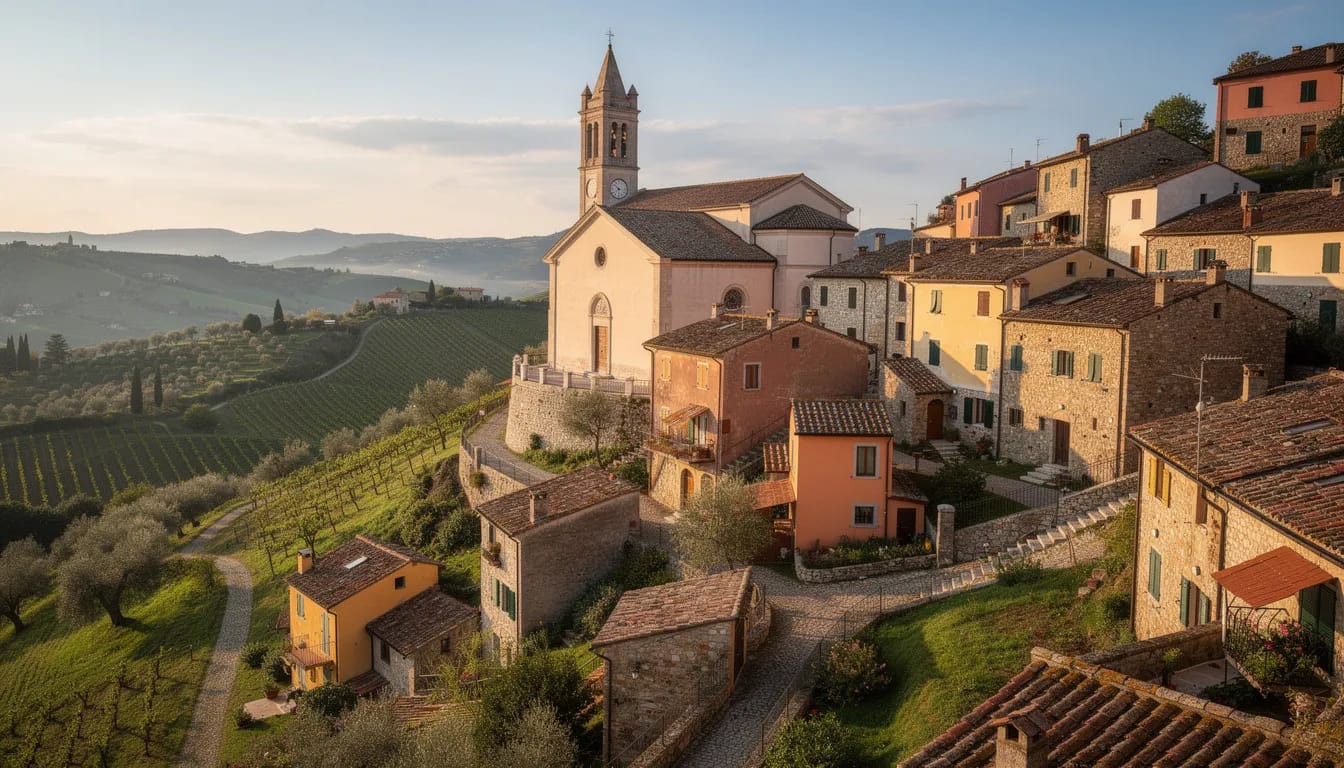
Italy offers everything from cosmopolitan capitals to quiet hilltop villages. Your choice shapes your budget, lifestyle, and daily experience.
Major cities
Rome: The Eternal City offers world-class healthcare, vibrant expat networks, and endless cultural stimulation. Expect higher costs—€1,200–€1,800+ monthly for a central one-bedroom—but unmatched access to history, art, and Italian life at its most intense.
Florence: A smaller, more walkable city beloved by English-speaking retirees. Strong cultural scene, excellent restaurants, and proximity to Tuscan countryside. Housing costs are significant in the centro storico but more reasonable in peripheral neighborhoods.
Milan: Italy’s financial and fashion capital. Modern, efficient, and expensive. Best for retirees who want urban sophistication and easy access to the rest of Europe.
Mid-sized cities with character
These offer rich culture at significantly lower cost:
City | Approximate 1-Bed Rent | Notable Features |
|---|---|---|
Bologna | €700–€900/month | Food capital, university town, excellent transport |
Turin | €600–€800/month | Alpine backdrop, café culture, underrated gems |
Verona | €650–€850/month | Opera, romance, Lake Garda nearby |
Parma | €550–€750/month | Culinary heaven, manageable size |
Southern Italy and the islands
Regions like Puglia, Calabria, Sicily, and Sardinia offer the most affordable cost of living in Italy, often with the added benefit of special tax incentives for retirees.
Advantages:
- Monthly budgets 30–40% lower than northern cities
- Milder winters in coastal areas
- Authentic Italian culture less touched by mass tourism
- Potential 7% flat tax on foreign pension income in qualifying municipalities
Considerations:
- Healthcare infrastructure can be more variable in rural areas
- Fewer English speakers
- Some areas require a car for daily life
Before you commit
Spend an extended “test stay” of 2–3 months in your preferred region before signing a long-term rental or purchasing property. What feels charming during a two-week vacation may feel isolating after months of daily life.
Healthcare for retirees on the elective residence visa
Italy’s public healthcare system—the Servizio Sanitario Nazionale (SSN)—consistently ranks among the best in the world according to the World Health Organization and similar bodies. But access for elective residence visa holders isn’t automatic.
Italy has an excellent healthcare system that provides access to free or inexpensive public services through the Servizio Sanitario Nazionale (SSN).
All Italian citizens and legal residents can register with the SSN to gain access to a wide range of medical services for a modest fee.
Most expats in Italy choose to supplement public healthcare with private health insurance. Retirees can access a wide range of medical services through the SSN once they obtain their residence permit.
Private insurance: mandatory at first
For your visa application and initial period of residence, private health insurance is required. Expect to pay:
Age Range | Approximate Monthly Premium |
|---|---|
55–65 | €100–€180 per person |
65–75 | €150–€250 per person |
75+ | €200–€350+ per person |
Coverage should include emergency care, hospitalization, outpatient treatment, and repatriation. Pre-existing conditions often have waiting periods or exclusions—read policies carefully.
Private health insurance in Italy can cost between €100 to €500 per month depending on age and health.
Joining the SSN
The rules for elective residence holders joining Italy’s public system are less straightforward than for work visa holders:
- Some regions allow voluntary enrollment on payment of an annual contribution (often €400–€2,000 depending on income)
- Other regions apply stricter interpretations and may limit access
- Check with your local ASL (Azienda Sanitaria Locale) after establishing residence
Practical healthcare approach
Most expat retirees use a hybrid approach:
- Register with SSN if your region allows it—covers emergencies and routine care
- Maintain private insurance for faster specialist access and private hospital options
- Build relationships with English-speaking doctors in your area
The Italian healthcare system delivers excellent outcomes, particularly for the cardiovascular and cancer care that many retirees eventually need. Proximity to a well-equipped hospital should factor into your location choice.
Taxes, cost of living & budgeting for retirement in Italy
Retiring in Italy has real tax implications that must fit within the income you’re showing for your visa application. Ordinary income in Italy is taxed at rates ranging from 23% to 43%, depending on the amount. Retirees are generally required to pay taxes in Italy based on their residency status. Many retirees find that everyday expenses such as groceries and public transportation are more affordable in Italy.
Italian tax residency basics
If you spend more than 183 days per year in Italy and register as a resident, you become an Italian tax resident. This means:
- You’re taxed on worldwide income, including foreign pensions, investment returns, and rental income
- You must file Italian tax returns annually
- Regional taxes and municipal taxes add to your national tax bill
National income tax brackets (2025)
Taxable Income | Rate |
|---|---|
Up to €28,000 | 23% |
€28,001–€50,000 | 35% |
Over €50,000 | 43% |
Regional and municipal surcharges typically add 1–3% on top of these rates.
Special tax regime for southern retirees
Italy offers a 7% flat tax on foreign pension income for retirees who:
- Transfer residence to qualifying municipalities in southern Italy (Sicily, Calabria, Sardinia, Campania, Basilicata, Abruzzo, Molise, Puglia)
- Meet population and other technical requirements
This can dramatically reduce your tax bill compared to progressive rates. However, the regime has specific conditions—consult an Italian tax specialist before relying on it.
Avoiding double taxation
If you’re American, you’ll continue filing US taxes on worldwide income regardless of where you live. To avoid double taxation, retirees need to be aware of tax treaties between Italy and their home country, as these agreements determine how income is taxed and help prevent being taxed twice on the same income. American retirees in Italy must file an annual federal tax return in the US, regardless of their residency status in Italy. The foreign tax credit allows you to offset Italian taxes paid against your US tax liability, preventing true double taxation in most cases. The foreign earned income exclusion and foreign housing exclusion don’t apply to retirement income, but the tax credit typically handles the coordination. Retirees in Italy can also benefit from tax incentives and deductions that may help reduce their overall tax bill.
British, Canadian, and Australian retirees face similar home-country obligations, with double taxation treaties governing which country taxes what.
Cost of living benchmarks
Expense Category | Single Person (Monthly) | Couple (Monthly) |
|---|---|---|
Rent (1-bed, mid-size city) | €500–€800 | €500–€800 |
Rent (1-bed, Rome/Florence/Milan) | €900–€1,500 | €900–€1,500 |
Utilities | €100–€180 | €100–€180 |
Groceries | €300–€450 | €450–€600 |
Dining out | €150–€300 | €250–€450 |
Healthcare (private insurance) | €150–€250 | €300–€500 |
Transportation | €50–€150 | €50–€150 |
Total (mid-size city) | €1,700–€2,300 | €2,400–€3,000 |
Total (major city) | €2,200–€3,200 | €3,000–€4,200 |
Budget conservatively. Currency fluctuations between dollars/pounds and euros can swing your effective income significantly over time.
Italy offers a high quality of life for retirees due to its diverse regions and rich culture. The cost of living in Italy can be surprisingly affordable compared to other Western European countries.
Southern Italy generally has a lower cost of living than major cities like Rome and Milan. Retirees can enjoy a laidback pace of life in Italy, which is appealing for many.

Frequently asked questions about the retire in Italy visa
Can my spouse and children join me?
Yes. You can include a cohabiting spouse (or registered partner) and dependent children in your application. However, household income thresholds increase—typically €38,000+ for a couple, plus additional percentages for each dependent. You’ll need civil status documents proving the relationships.
Adult children or elderly parents may qualify in exceptional circumstances involving genuine dependency, but the requirements are strict.
Can I work or freelance in Italy on this visa?
No. Neither employment nor self-employment in Italy is permitted. You cannot:
- Take a job with an Italian or foreign employer based in Italy
- Freelance or consult, even for clients outside Italy
- Actively run a business in Italy
All income must remain passive and generated outside the Italian labor market. Even remote work for foreign nationals or companies is a gray area that can jeopardize renewals.
Can I apply while I’m already in Italy as a tourist?
In practice, no. You must apply from your home country through the Italian consulate with jurisdiction over your residence. Attempting to switch from tourist status to elective residence while in Italy is almost always refused.
Do I need to buy property in Italy to qualify?
No. A registered rental contract is perfectly acceptable proof of accommodation. Many retirees rent initially to test an area before considering a purchase.
How long does the visa process take?
From complete application submission to decision, expect 30–90 days. Some consulates process faster; others are slower during busy periods. Plan 3–6 months ahead to allow time for document gathering, appointment scheduling, and processing.
How long do I have to be in Italy each year?
There’s no explicit national “minimum days” rule written into the visa regulations. However:
- Spending fewer than 183 days annually can jeopardize renewals
- It may affect your tax residency status
- It can disqualify you from the continuous residence required for permanent residency or citizenship
If you want to progress toward long-term status, plan to spend at least 6 months per year in Italy.
Can I switch from elective residence to another status later?
Sometimes, but it’s not automatic. Switching to a work visa or different category requires meeting that category’s full requirements and starting a new application. It’s bureaucratically complex and not guaranteed.
What happens if my income drops below the requirement?
Renewals can be refused if you no longer meet financial criteria. Consulates and Questure review your current financial situation at each renewal. Plan a stable, conservative budget and keep documentation current to avoid problems.
Key takeaways
- The Italian elective residence visa is your gateway to retiring in Italy if you’re a non-EU citizen with stable passive income
- Expect to demonstrate approximately €31,000–€32,000 annually for a single applicant, or €38,000+ for couples
- You cannot work in Italy—all income must come from pensions, investments, rentals, or other passive sources
- The application process takes 3–6 months when you factor in document preparation and consular processing
- After arrival, you’ll convert your visa to a residence permit and can pursue permanent residency after 5 years, citizenship after 10
The Italian lifestyle—rich culture, excellent food, strong healthcare, and that ineffable quality of la dolce vita—awaits those who prepare thoroughly. Start by visiting your nearest Italian consulate’s website, reviewing their specific requirements, and beginning to organize your financial documentation.
Italy isn’t just a place to visit. With the right planning, it can be where you live your best retirement years.