
If you have been paying attention to the sharp increase in Americans researching a move to Italy, you are not imagining things. Since 2024, inquiries about relocating to Italy from US addresses have surged by an estimated 30 to 50 percent, according to immigration professionals and relocation firms across Europe. The drivers are concrete: US political polarization, uncertainty around healthcare policy, rising costs of living in major cities, and a broader sense of global instability have pushed many Americans to seek a “Plan B” residence in a stable European union country. Italy, with its rich culture, universal healthcare system, and welcoming pathways for non eu citizens, has emerged as a top destination.
Italy offers something that few other destinations can match for Americans: political stability within the EU, access to Italy’s public healthcare system, and multiple legal routes to long-term residence and even citizenship. Whether you are a retiree seeking la dolce vita, a high-net-worth individual protecting family wealth, or a remote worker looking to base yourself in Europe, Italy has a legal pathway that may fit your situation. At Bersani Law Firm&Partners, based in Verona, we work daily with US clients navigating exactly these decisions—retirees, HNWIs, digital nomads, and families with Italian ancestry.
So, can a US citizen move to Italy long-term?
The answer is yes, but it requires the right legal structure. The main options are Italian citizenship (by descent or marriage), the elective residence visa for financially independent applicants, the digital nomad visa for remote workers, work or self-employment visas, and the investor visa (commonly called the golden visa) for those making a significant financial investment. This guide is designed to walk you through each pathway with the legal precision and practical detail you need to make an informed decision.

Short Stays vs Long-Term Moves: Basic Rules for US Citizens
Before diving into long-stay options, it is important to understand the baseline rules for US citizens visiting Italy.
- US citizens can enter Italy and the broader Schengen area without a visa for up to 90 days within any rolling 180-day period. This covers tourism, family visits, and short business activities, but does not allow you to work or establish residence. To stay in Italy longer than 90 days, non-EU citizens must obtain a long-stay visa before applying for a residence permit.
- Staying beyond 90 days requires a National (Type D) long stay visa, also called a National Visa, issued by an Italian consulate in the United States before you depart. You cannot convert a tourist entry into a long-term visa from inside Italy.
Visa processing times can vary, but typically take several weeks to a few months depending on the type of visa and the consulate’s workload. To apply for a long-stay visa, applicants must submit their application at the nearest Italian consulate or embassy. The application process for a visa can take several months, and applicants should prepare for potential interviews at the consulate. - A visa (stamped in your passport abroad) is distinct from a residence permit.
Non-EU citizens must apply for a residence permit (Permesso di Soggiorno) within eight days of arriving in Italy on a long-stay visa.
Once you arrive in Italy with your visa, you must apply for a permesso di soggiorno (residence permit) within 8 days at a local post office or Questura (immigration police office). The process of obtaining a residence permit in Italy typically requires submitting an application at a national post office and waiting for an appointment at the local immigration office.
After obtaining a residence permit, you must apply for a certificate of residence at your local civil registry within 20 days of receiving the permit. - After ten years of residency in Italy, you can apply for Italian citizenship, provided you meet the language requirements.
- The upcoming ETIAS pre-travel authorization, expected for American travelers, will not replace or change the 90/180-day rule. It is simply an additional entry screening, not a visa or residence permit.
- Buying property in Italy does not, by itself, grant you the right to stay longer than 90 days. Owning a villa in Tuscany or an apartment in Rome is possible, but it does not bypass immigration rules. You still need a visa and residence permit to live there legally.
Italian Citizenship Options for Americans
For Americans seeking the most powerful and permanent solution, obtaining Italian citizenship is the gold standard. Italian citizenship automatically confers EU citizenship, granting you the right to live, work, and study freely anywhere in the european union—without visas, permits, or time limits.
Bersani Law Firm&Partners handles three main citizenship routes relevant to US clients: citizenship by descent (jure sanguinis), 1948 court cases, and citizenship by marriage. Each has distinct requirements and timelines, and the right path depends on your family history and personal situation. Citizenship is separate from the visa process, but once obtained, it removes the need for any long stay visa or residence permit in Italy or other eu countries.
Citizenship by Descent (Jure Sanguinis) for Americans
Italian citizenship by descent operates on the “right of blood” principle. If you have an Italian-born ancestor—often someone who emigrated to the US in the late 1800s or early 1900s—you may qualify for citizenship, provided there is no break in the chain. A “break” typically means your ancestor became a naturalized US citizen before the birth of the next generation in the line, which can extinguish the claim.
Recent years have seen increased scrutiny of naturalization dates in US records. Italian authorities and courts now pay close attention to whether an Italian ancestor acquired US citizenship while their child was still a minor, and how this affects the transmission of Italian citizenship. These details can make or break a case.
Typical documentation required includes:
- Italian birth, marriage, and death certificates from the ancestor’s comune of origin
- US birth, marriage, death, and naturalization records for each generation
- Apostilles and certified Italian translations for all foreign documents
Consulate appointments in major cities like New York, Los Angeles, Miami, and Chicago are often backlogged several years. Many applicants now pursue their claim through Italian courts (the judicial route), which can be faster and is especially useful when consular paths are blocked or delayed. Bersani Law Firm&Partners regularly litigates these cases on behalf of US clients.
A successful jure sanguinis case benefits entire families: spouses and minor children can often be included, providing a secure path to EU residence and a way out of current US uncertainty.
Contact us
Need help with your Italian Citizenship? Contact us.
1948 Cases: Overcoming Gender Discrimination in Lineage
“1948 cases” arise when Italian ancestry passes through an Italian woman who had a child before 1 January 1948. Under the law as it existed then, women could not automatically transmit citizenship to their children—an obvious case of gender discrimination.
Italian consulates will not accept these claims administratively. However, Italian courts have consistently recognized the right to citizenship in these cases, ruling that the historic discrimination cannot bar descendants from their rightful status. If your lineage includes a female Italian ancestor whose child was born before 1948, your case must go to court, not the consulate.
Americans with this lineage profile should always have their case evaluated for a potential 1948 judicial claim, even if a consulate has previously said they are “not eligible.” These cases typically take 12 to 24 months to resolve, and most applicants do not need to be physically present in Italy. Bersani Law Firm&Partners assists US families throughout this process, from gathering evidence to filing petitions and representing clients remotely.
Citizenship by Marriage to an Italian Citizen
American spouses of italian citizens can obtain citizenship after a specified period of marriage:
- 2 years if living together in Italy
- 3 years if living abroad
- Time is halved if the couple has children together
For more information on Italian citizenship by descent (1948 case), you can refer to the comprehensive guide.
Main requirements include:
- Clean criminal record checks from the US (typically an FBI background check) and any other countries of residence
- Proof of a valid and ongoing marriage
- Certified italian language proficiency at B1 level or above
The process is centralized with the italian ministry of the Interior and can take several years. Precise documentation is critical; errors or omissions extend processing times significantly.
Many US citizens combine a marriage-based citizenship application with a prior visa (such as an elective residence visa or digital nomad visa) to live in Italy while their application is pending. Bersani Law Firm&Partners can analyze criminal records, language certificates, and marriage documentation to anticipate issues before filing.
Key Long-Stay Visas for Americans: Choosing the Right Path
For Americans who do not yet have—or do not qualify for—Italian citizenship, the main pathways are long-stay visas. The most common options are:
- Elective Residence Visa (for retirees and financially independent individuals)
- Digital Nomad Visa (for remote workers)
- Investor Visa / Golden Visa (for HNWIs)
- Work or self-employment visas
- Student visa
Requirements are set by Italian law, but document checklists and interpretations can vary by italian consulate in the US. Every long stay visa requires a clear plan for accommodation, sufficient financial means, and private health insurance valid in Italy from day one.

Elective Residence Visa (ERV) for Retirees and Financially Independent Americans
The elective residence visa is designed for individuals and couples who can support themselves in Italy through stable passive income—pensions, Social Security, annuities, rental income, dividends—and do not intend to work in Italy. This is often called a retirement visa, though it is not limited to retirees.
Key requirements:
- Minimum annual income of approximately €31,000 for a single applicant (roughly $33,000–$34,000 USD as of 2025), with higher amounts for a spouse or dependents. The Elective Residence Visa requires proof of sufficient passive income, typically at least €31,000 per year for individuals.
- Income must be passive and recurring; employment income or active business income is not accepted
- Strong assets and savings help the application, but alone do not replace income requirements
- Proof of suitable accommodation (rental agreement or property ownership)
- Private health insurance covering at least €30,000 in medical expenses
These are the main requirements for the Elective Residence Visa for Italy.
The visa is typically issued for 1 year and can be renewed. After 5 years of continuous, lawfully documented legal residency, the holder can apply for permanent residency; after 10 years, eligibility for Italian citizenship opens.
In the current US political and social climate, many Americans near or at retirement age use the ERV to secure a long-term base in Italy. Bersani Law Firm&Partners helps structure documentation, leases, and financial evidence to meet consular expectations.
Digital Nomad Visa for US Remote Workers
Italy’s digital nomad visa, implemented in 2024, is a relatively new option for highly qualified professionals who work remotely for non-Italian employers or clients—often US-based companies. The Digital Nomad Visa is available for remote workers and requires proof of employment or contracts with foreign companies.
Core requirements include:
- Proof of a qualifying profession (tech, consulting, creative industries, etc.)
- Minimum annual income of at least €28,000 (approximately $30,000 USD), or the current legal threshold
- At least 6 months of prior experience in the field
- Private health insurance valid in Italy
- Clean criminal record
- Suitable accommodation
The visa usually starts with a 1-year validity and can be renewed as long as conditions are met and the applicant continues to work remotely and pay taxes as required.
Properly structuring contracts (employee vs. independent contractor) and tax residence is essential. Bersani Law Firm&Partners works with remote workers to align immigration status with both Italian and US tax obligations. Geopolitical uncertainty and the normalization of remote work have made this visa especially attractive to American tech workers, consultants, and location-independent professionals seeking a European base.
Investor Visa for Italy (Golden Visa) for HNW Americans
Italy’s investor visa—often called the golden visa—offers a 2-year residence permit (renewable for 3 more years) in exchange for a significant financial investment into Italy. This pathway targets high-net-worth individuals seeking mobility, lifestyle, and long-term EU presence.
Qualifying investment options:
Investment Type | Minimum Amount |
|---|---|
Italian government bonds | €2,000,000 |
Established Italian company | €500,000 |
Innovative startup | €250,000 |
Philanthropic donation (public interest) | €1,000,000 |
Unlike some other European “golden” programs (Portugal’s, for example, has been shuttered), Italy’s scheme remains active but is carefully scrutinized by italian authorities and the EU. Strong documentation and due diligence are essential.
Typical procedure:
- Preliminary approval from the Investor Visa Committee in Italy
- Issuance of the italian visa by an italian consulate in the US
- Entry into Italy and completion of the investment within a fixed period
- Issuance of the residence permit
Bersani Law Firm&Partners provides full legal coordination for HNW Americans: structuring the investment, liaising with banks and target companies, ensuring compliance, and advising on complementary regimes such as Italy’s flat tax regime for new residents (a €100,000 annual lump-sum tax on foreign-source income, extendable to family members).
Contact us
Interested into the Golden Visa for Italy? Contact us.
Other Visa Routes: Work, Self-Employment, and Study
Standard employee work visa options for Americans are limited by Italy’s annual quota system (decreto flussi). This work permit process typically requires an italian employer to obtain a work authorization (nulla osta) before the visa can be issued. Quotas favor skilled sectors like tech, healthcare, and engineering.
Self-employment visas (for freelancers, entrepreneurs, or certain regulated professions) are possible but highly regulated, subject to quotas, and require showing business plans, professional registrations, and minimum income or assets. An employment contract is not required, but a job contract or detailed business plan is.
The student visa remains a practical entry route for Americans enrolling in Italian universities or accredited programs. Students may work up to 20 hours per week and can potentially convert to work or other permits after graduation, offering a path into the italian education system and, eventually, the broader italian economy.
These categories are complex and competitive. Early legal review is crucial before committing to a job offer, business plan, or academic program.
Buying Property in Italy as an American: Opportunities and Limits
US citizens may purchase italian real estate thanks to reciprocity between the US and Italy. Whether you want an apartment in Rome, a villa in Tuscany, or a farmhouse in Umbria, ownership is legally straightforward.
However, owning property does not itself create a right to stay more than 90 days in any 180-day period. You cannot bypass the visa and residence permit requirements simply by choosing to purchase italian real estate.
Property can be part of a broader relocation strategy:
- Providing the required accommodation evidence for an elective residence visa or digital nomad visa application
- Serving as part of a wealth-structuring plan for investor visa and flat tax regime candidates
- Offering long-term family security and a base in Europe
American buyers should expect involvement of an Italian notary, due diligence on cadastral records, and careful inheritance and tax planning (Italian succession rules differ significantly from US norms). Coordination with both Italian and US advisors is essential.
Bersani Law Firm&Partners can coordinate relocation-focused property purchases so that contracts and timing align with visa application deadlines and planned move-in dates.
Some Key notes about properties:
- Rentals in city centers of Italy can range from $850 to $1,500+, while rural areas are generally cheaper.
- High costs for utilities occur in Italy, particularly for heating and electricity.
- On average, a single person can expect to spend around €1,500 to €2,000 per month while families may spend around €2,500 to €3,500 per month.
- Major cities like Rome or Milan tend to be more expensive, with higher rent and living costs, while smaller towns and rural areas typically offer a more affordable lifestyle.
- Healthcare in Italy is consistently ranked as one of the best in the world and is free of charge at point-of-service for residents.
- Italy’s national health service (Servizio Sanitario Nazionale, SSN) offers free or low-cost healthcare and medical services to all residents.
- Italian banks are notorious for charging high maintenance fees, often around €300 to €500.
- Many smaller towns and villages in Italy have made headlines for selling off abandoned rural homes for just €1.
Contact us
Looking for real estate in Italy? Contact us.
Establishing Legal Residence in Italy After Arrival
Once in Italy with the correct visa, Americans must promptly complete residence formalities to live there lawfully beyond 90 days.
Core Steps
- Apply for the permesso di soggiorno within 8 days of arrival (usually via a “kit” at a post office), then attend fingerprinting at the Questura.
- Register residence (iscrizione anagrafica) at the local comune once stable accommodation is in place.
- Obtain a codice fiscale (Italian tax code) as early as possible—this is required for leases, utilities, opening an italian bank account, phone contracts, and most legal acts. The Italian codice fiscale is a unique tax number created from your surname, first name, date of birth, and sex, and is essential for many administrative procedures.
- Request an Italian ID card (carta di identità) after registration.
- Register with the national health service (Servizio Sanitario Nazionale) using income proofs; eligible legal residents receive a health insurance card (tessera sanitaria) for access to Italy’s public healthcare system.
Apply for the permesso di soggiorno
Apply for the permesso di soggiorno within 8 days of arrival (usually via a “kit” at a post office), then attend fingerprinting at the Questura.
Register residence (iscrizione anagrafica)
Register residence (iscrizione anagrafica) at the local comune once stable accommodation is in place.
Obtain a codice fiscale (Italian tax code)
Obtain a codice fiscale (Italian tax code) as early as possible—this is required for leases, utilities, opening an italian bank account, phone contracts, and most legal acts. The Italian codice fiscale is a unique tax number created from your surname, first name, date of birth, and sex, and is essential for many administrative procedures.
Request an Italian ID card (carta di identità)
Request an Italian ID card (carta di identità) after registration.
Register with the national health service (Servizio Sanitario Nazionale)
Register with the national health service (Servizio Sanitario Nazionale) using income proofs; eligible legal residents receive a health insurance card (tessera sanitaria) for access to Italy’s public healthcare system.
These steps are bureaucratic and can differ by comune. Bersani Law Firm&Partners assists remote or newly arrived US clients with forms, translations, and accompanying them to key appointments.
Some additional important key notes we think you need to keep in mind for your stay in Italy:
- Learning Italian is essential for navigating daily life and bureaucracy in Italy.
- The US driver’s license is valid in Italy for only one year; an Italian license must be obtained afterward.
- Living in Italy offers a rich cultural experience with a strong emphasis on family and community.
- The pace of life in Italy is generally more relaxed compared to many other countries, which can be both a benefit and a challenge for expats.
- The bureaucratic processes in Italy can be slow and complex, which may frustrate new residents.
- Expats often find that the cost of living varies significantly between urban and rural areas in Italy.
- Cultural differences can lead to misunderstandings, especially regarding social norms and communication styles.
- Many expats appreciate the high quality of life in Italy, including access to fresh food and a vibrant social scene.
Taxes, Flat Tax Regime, and Cross-Border Planning for Americans
Tax planning is a central concern for Americans relocating from a high-tax, complex system to Italy’s equally detailed but differently structured tax environment.
Italian tax residency basics
- Italy typically considers you tax resident if you are registered as resident and spend more than 183 days in Italy during a calendar year.
- Italian tax residents are taxed on worldwide income, subject to some exceptions and special regimes.
- Italy’s progressive income tax rates reach up to 43% on income over €50,000, plus regional and municipal surcharges.
Special regimes for new residents
- The €100,000 flat tax regime for new residents: a lump-sum annual italian tax on foreign-source income, extendable to family members (€25,000 each), designed to attract HNWIs.
- Incentives for inbound workers and, in some cases, retirees relocating to certain southern Italy regions.
US tax obligations
- US citizens remain subject to US tax filing on worldwide income regardless of where they live.
- FBAR and FATCA reporting apply to Italian assets (including an italian bank account) exceeding $10,000.
- The US–Italy tax treaty, foreign tax credits, and exclusions help avoid double taxation, but careful coordination is essential.
- Americans should expect to address their us tax bill and expat taxes as part of any relocation plan.
Bersani Law Firm&Partners works with specialized tax partners to design relocation plans that align immigration status (such as an investor visa or elective residence visa) with Italian and US tax optimization and asset protection.
Lifestyle, Regions, and Choosing Where to Live as an American
Living in Italy is not a permanent vacation—but for many Americans, it offers a slower pace, better work–life balance, and a different political and social climate compared with the United States. Italy’s place within the european union, its public healthcare, and strong social safety nets are increasingly valued by Americans seeking stability.
Key regions and cities from a relocation perspective
Region/City | Best For |
|---|---|
Milan, Rome | Business, international schools, major cities, proximity to city center amenities |
Florence, Bologna | Culture, students, access to the italian education system |
Verona, Lake Garda | Families, retirees, Bersani Law Firm&Partners’ home region |
Puglia, Sicily, Calabria | Lower costs, regional financial incentives (some areas italy offer financial incentives to new residents) |
northern italy | Business, industry, proximity to other european countries like Vatican City, Switzerland |
southern italy | Affordable living, slower pace, emerging digital nomad communities |
Rome is the capital city of Italy and offers a dynamic urban experience with world-class museums and a vibrant culinary scene. | |
Milan is known as Italy’s fashion and design capital, offering a cosmopolitan atmosphere and thriving business opportunities. |
Florence is a UNESCO World Heritage site renowned for its rich history, stunning architecture, and world-class art collections.
Sicily is Italy’s largest island, known for its Mediterranean culture, history, and natural beauty, appealing to retirees and expatriates.
Puglia is a region in Southern Italy known for its laid-back lifestyle and beautiful coastal towns.
Trieste is a small coastal city in Italy that offers a unique history and a blend of sea and hills.
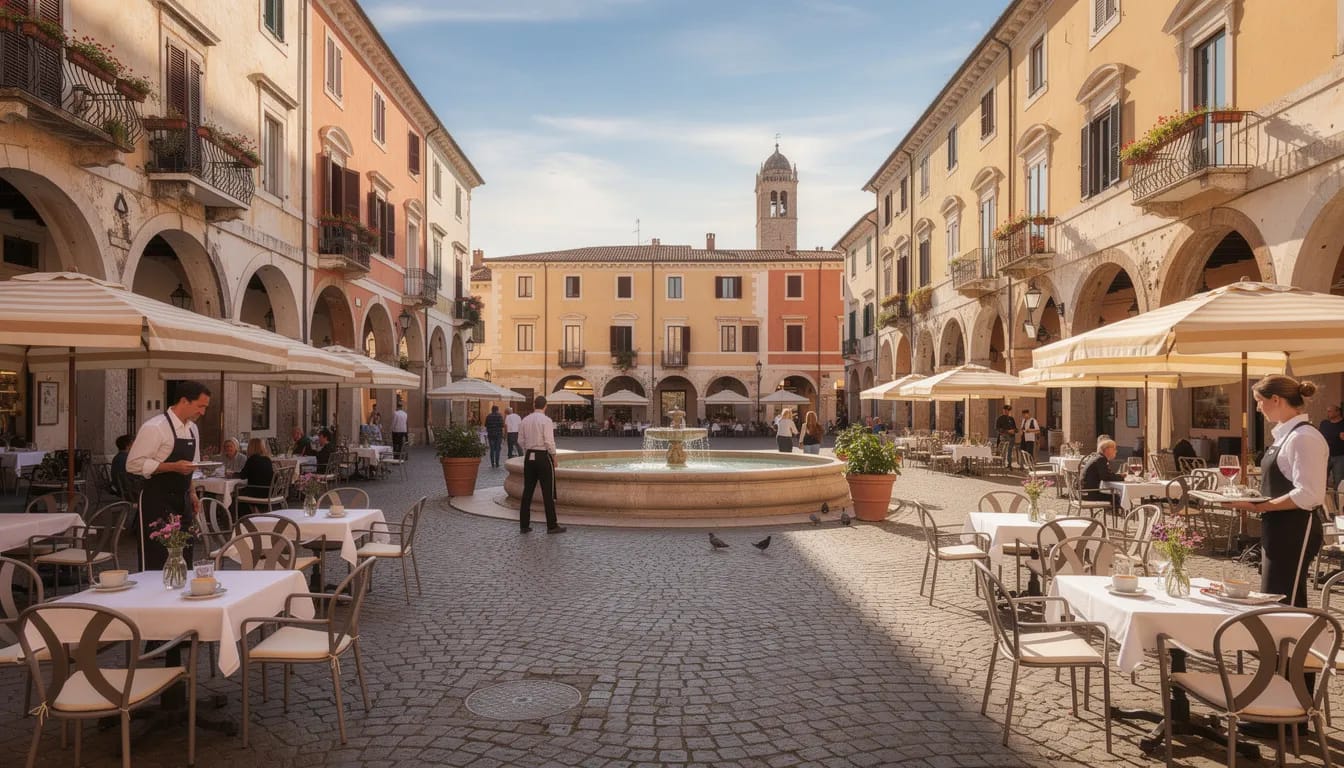
Verona is a city in Northern Italy that offers a central location for domestic travel and is close to Lake Garda and the Dolomites.
Match your visa type and lifestyle
- Elective residence visa holders often prefer quieter historic towns
- Digital nomads prioritize good internet and international communities
- Golden visa holders may want proximity to financial centers and top private school or international schools for children, potentially leading through upper secondary school
Before committing, conduct at least one extended scouting trip within your 90-day tourist allowance to visit italy and explore regions firsthand.
Working with a Boutique Italian Immigration Law Firm
Immigration rules, consular practices, and Italian court interpretations evolve—especially after 2023–2024 reforms. US citizens benefit from tailored legal advice rather than relying on outdated forums or generic checklists.
How Bersani Law Firm&Partners works with American clients:
- Initial consultation (by video call) to map citizenship and visa options
- Review of family history, financial profile, and relocation goals
- Step-by-step legal strategy tailored to your situation
Firm specializations:
- Complex jure sanguinis and 1948 citizenship cases
- Citizenship by marriage
- Elective residence visa for retirees
- Investor visa / golden visa strategy for HNWIs
- Digital nomad visa planning
Practical support:
- Liaising with Italian consulates in the US
- Gathering Italian records from municipal archives
- Coordinating sworn translations and apostilles
- Preparing court filings for judicial citizenship cases
- Supporting residence registration once clients land in Italy
If you are considering a move to Italy, contact Bersani Law Firm&Partners during US morning hours (the firm operates weekdays, 9–5 Italy time) to discuss your individual situation before you book flights or sign a rental agreement.
Conclusion: Turning a US–Italy Relocation into a Strategic Move
In 2025, relocating to Italy from US addresses is increasingly driven not only by lifestyle dreams but by concrete political, economic, and security concerns. The pathways discussed—Italian citizenship routes (descent, 1948 cases, marriage) and the core visas (elective residence visa, digital nomad visa, investor visa/golden visa, work visa, and student visa)—form the legal foundation of any serious relocation plan for us citizens.
Approach your move as a long-term legal and financial project, not a spontaneous escape. Align your immigration status, tax planning, property purchases, and family needs with expert guidance. Early legal planning can save years of delay, protect family wealth, and ensure that your European future is built on a secure foundation. Schedule a tailored consultation with Bersani Law Firm&Partners to evaluate your eligibility, timelines, and risks—and take the first step toward becoming one of the growing number of American legal residents building new lives in Italy.